Translate

Thursday, January 2, 2020

Airbus Overtake Rival Boeing for first time since 2011 as 737 Max crisis drags on

Airbus grabbed the title of world's biggest plane maker from its embattled US rival Boeing in 2019 after it delivered a forecast-beating 863 aircraft in the last year.

The Toulouse-based plane manufacturer won the top spot for the first time since 2011, as the crisis surrounding Boeing's grounded 737 Max drags on into 2020, Reuters reported, citing airport and tracking sources.

Airbus did not immediately respond to a request for comment when contacted by The National on Thursday.

The victory for Airbus, which reverses the ranking in the duopoly between the giant aerospace rivals, was anticipated after a tough year for the Chicago-based plane maker. The grounding of Boeing's best-selling narrowbody jet after two fatal crashes that killed 346 people had a profound impact on the company and the aviation industry. The disasters and their aftermath led to multiple regulatory and criminal investigations, hurt airline operations, disrupted suppliers and dented traveller confidence in the plane. Boeing ousted its chief executive Dennis Muilenburg, replacing him with chairman David Calhoun, in the hope of regaining trust.

The Airbus aircraft delivery figures highlight how far Boeing has to climb to recover its market position.

Airbus, which is grappling with its own industrial problems, beat its forecast of 860 jet deliveries by deploying extra resources until hours before midnight on New Year's Eve in France to reach 863 aircraft for the year, according to Reuters.

Airbus's plane deliveries in 2019 rose 7.9 per cent from 800 aircraft in 2018.

Airbus’s tally, which included around 640 narrowbody aircraft, broke industry records after it deployed thousands of workers and cancelled holidays to complete a buffer stock of semi-finished aircraft waiting to have their cabins adjusted, Reuters said.

Airbus's industrial delays, related to cabin fittings on its A321 Neo jets, have curtailed its ability to take advantage of the market turmoil surrounding Boeing’s 737 Max, grounded globally since March following the two fatal incidents.

Boeing delivered 345 mainly long-haul jets between January and November, less than half the number of 704 achieved in the same period of 2018, when the Max was being delivered normally. For the whole of 2018, Boeing delivered 806 aircraft.

Boeing's ongoing 737 Max woes marked a tumultuous year that forced the aviation industry to grapple with big questions such as whether the plane maker will overcome the Max debacle and if travellers will be too scared to fly on the jet.

Airbus shares rose about 3 per cent to €134 (Dh551) by 4pm UAE time after news of the plane delivery total that toppled Boeing as the world’s biggest jetmaker for the first time in eight years.

The duopoly has been locked in a fierce rivalry to win orders for new jets and claim the top spot in the aviation industry. The two are also in the midst of a World Trade Organisation dispute, accusing each other of being unfairly subsidised by their governments.

Boeing launched its 737 Max re-engined model in response to Airbus’s A320 Neo fuel-efficient single-aisle planes that became an instant hit with airlines.

Source: thenational.ae

Turkish Airlines pockets $225m from Boeing over grounded 737 Max

Turkish Airlines has received $225million in compensation from Boeing to cover losses incurred over the U.S. manufacturer’s grounded 737 MAX aircraft.

The airline’s public disclosure statement to the Istanbul stock exchange did not mention the value of the deal, but Hurriyet newspaper put it at $225 million and said it was received early on Tuesday.

“Turkish Airlines and Boeing came to an agreement concerning compensation for certain losses caused by the grounded and undelivered Boeing 737 Max aircraft,” the disclosure said.

The flagship 737 MAX has been grounded since March after crashes in Indonesia and Ethiopia killed 346 people.

Turkish Airlines halted the use of 12 737 MAX aircraft. It was expecting delivery of an additional 12 jets in 2019.

In December, Boeing said it would temporarily suspend production of the 737 MAX starting next year.

Boeing Fired Chief Executive Dennis Muilenburg last week amidst the continuing fallout from the crashes which triggered the biggest crisis in the company’s history.

Hurriyet reported that the compensation, including 75 million dollars for spare parts and training, covers losses for 2019.

It also said that Turkish Airlines would receive additional compensation for further losses that it suffers until the planes are operational again.

Earlier in December, Turkish media reported that Turkish Airlines was readying to sue Boeing over the grounded and undelivered aircraft, which forced it to increase fares and cut domestic flights

Source: pmnewsnigeria

Hong Kong aviation authority orders investigation into air traffic control system after New Year’s Day hitch

Hong Kong’s aviation authority has told a contractor to investigate a brief hitch to the air traffic management system on the first day of the new year. Individual workstations of its air traffic management system were “not responsive to commands” in the morning, Civil Aviation Department said in a statement released on Wednesday. The problem prompted technical staff to switch to a fallback system identical to the original one – at 9.10am, it said.A department spokesman said there were some temporary restrictions on departing flights, but “arrivals and [flights over the region] were not affected”.

There was no risk to safety, he added.

He said the air traffic control officers were able to maintain direct voice communication with pilots at all times, as well as monitor and obtain full information of all flights within Hong Kong airspace.

The main system was rebooted, checked by the department’s technical staff then used as a backup. The ultimate fallback system was not activated during the process.

The department did not reveal how long the hitch lasted, only describing it as “brief”.

It said it had tasked the system’s contractor to conduct a thorough investigation and submit a report as soon as possible.

Warren Chim Wing-nin, a spokesman for the aircraft division at the Hong Kong Institution of Engineers, said the incident did not appear to be high-risk, based on the available information.

“In reality, it is impossible for a system to be completely free from problems,” Chim said. “You can’t say something is abnormal because there are incidents.”
He said factors to be looked into should include why such a problem had happened and whether the problem was similar to those that had happened in the past or a new problem.

Other problems have been reported in the current air traffic management system. In August 2018, radar screens did not show full information for three flights. The department later explained the glitch stemmed from “unexpected data corruption” when the details of a flight route were being processed by the main air traffic management system.

Source: South China Morning Post

Wednesday, January 1, 2020

Aviation 2019: Major Happenings

The year of 2019 has brought the aviation industry a number of tough challenges, indeed. Issues related to aviation safety, decreasing trust in the most reliable aircraft manufacturers and regulatory authorities, a large number of aviation companies going bankrupt, etc.

2019 was rich in various events. Although it is natural for a human being to, first of all, remember the negative matters which closely correlate with such names as Thomas Cook, Jet Airways, Joon, Germania, WOW air, Boeing 737 MAX, Ethiopian Airlines, etc. Time to change stereotypes.

2019 has also brought a number of new “first times”, new technologies, new airports, new aircraft programs and maiden take-offs.

With the year of 2019 nearing to an end, let’s review the most impressive achievements and major positive events that happened during this year across the industry.

Tests for World’s Longest Commercial Flight

The first ever flight of a heavier-than-air aircraft took only 12 seconds. In 2019, therefore, Qantas set the goal to launch the longest commercial flight connecting the farthest points of the globe . If this is made reality, the flight will take 20+ hours.

With this ambition in mind, the carrier has completed three tests of the flight to study pilots’, cabin crews’ and passengers’ experience flying such long distances. Also, in the last month of the year Qantas announced the preferred choice of the aircraft: Airbus A350-1000.

Long-Awaited Openings of New Airports in China and Singapore

It was a year of huge openings in the airport’s sphere. In April, 2019, it was Singapore’s long-awaited Jewel Changi Airport which officially opened its gates for travellers. It is a multi-use complex designed to connect three of Changi Airport’s four terminals. Not to be omitted the fact that in 2019 Singapore’s Changi Airport was voted the best in the world.

Meanwhile, in September, 2019, after 45 months of construction, Beijing Daxing International Airport has finally opened its doors to the flying public. The new hub, already nicknamed ‘starfish’ (because of its design), is expected to lessen the pressure put on the Beijing Capital International Airport.

Electrification – Entirely New Page in Aviation History

Aviation is a relatively young industry, counting just a bit over a one hundred years. Nevertheless, the pace of its development is rather astonishing. From a service only for the wealthiest in the beginning of the 20th century, up to inevitably important part of every day life for masses.

In 2019, therefore, the new chapter of the aviation book has been opened with the first flight of a fully-electric commercial aircraft

. It was the DHC-2 de Havilland Beaver, the first all-electric seaplane operated by Harbour Air, that carried six passengers in Vancouver, Canada, in December, 2019.

Worth highlighting the fact that aviation training could be soon also turning electric. In 2019 Norway’s Pilot Flight Academy announced that it is aiming to provide fully-electric aviation education for pilots beginning 2021.

The age of electric planes has just began, however, in the attempts to make the industry more sustainable , it will not take centuries to release more and more all-electric aircraft.

Aviation Makers Turning Green. Target – Zero Emissions

Environmental pollution is one of the central topics globally. Especially in aviation, which represents around two percent of emissions of global carbon dioxide (CO2) , that is roughly equivalent to the overall emissions of Germany.

Thus, the year 2019 was critically important due to environmental reasons. A number of airlines started reporting its emissions, modernising fleets to become more sustainable, changing ordinary aviation fuel into biofuel.

For example, KLM Royal Dutch Airlines together with SkyNRG, global market leader for sustainable aviation fuel, announced it will develop Europe’s first dedicated plant for the production of
sustainable aviation fuel.

Furthermore, in 2019 Norway has set an ambitious goal for its aviation industry: emission-free domestic aviation by 2040.

Turbulent Year on Aircraft Market
For the aircraft market, 2019 has been quite the year. From halt of production to groundings to new programs and first take-offs.

The beginning of the year was marked with the announcement about the end of production of world’s biggest commercial airliner – Airbus A380

In 2021 Airbus will built the last A380 completing its backlog for the type and that would be the finish line for this plane.

Of course, grounding of the Boeing 737 MAX aircraft has greatly shaken the clear sky within the industry. Multiple troubles, struggling airlines, suffering passengers, however, some new planes have also got into the air.

Among these are Airbus A319neo, the last of the A320neo variants, which completed its maiden flight powered by Pratt & Whitney GTF engines in April, 2019, and Embraer E175-E2 , which made its inaugural flight in December, 2019.

Apart from the fact that Boeing had one of the most terrible years in its history, there were two secret debuts of brand new planes . Right after the crash of the Ethiopian Airlines 737 MAX 8 Boeing held an internal event aimed at the presentation of its long-awaited Boeing 777X for the company’s employees. Meanwhile in November, the planemaker debuted another aircraft of the 737 MAX family–737 MAX 10.

Also this year, two new commercial aircraft programs have been launched. On the first day of Paris Air Show 2019, Airbus officially unveiled its long-awaited new long-range A321XLR. It was one of the most anticipated events of the year.

Along with a new plane for longer passenger flights, innovation has been also introduced in the regional aircraft market, as well. In October, 2019, ATR announced about that it was approved to develop a brand new STOL (Short Take-Off and Landing) aircraft: ATR 42-600S.
2020 Next

These are only several major happenings from across the industry for the last 12 months of the decade. At this point, what is the most anticipated event in aviation in 2020?

Airbus A319neo
Airbus A321XLR
ATR 42-600S
Beijing Daxing Airport
Boeing 737 MAX 10
Boeing 777X
Changi Airport
Embraer A175-E2
environment
Harbour Air
sustainable aviation

Source: aviationvoice.com

Tuesday, December 24, 2019

Etihad Airways and Kuwait Airways enter codeshare

Etihad Airways and Kuwaiti flag carrier, Kuwait Airways, have signed a codeshare partnership on selected services on bookings effective 22 December 2019, for travel from 5 January 2020.

Subject to regulatory approvals, Etihad will place its ‘EY’ code on Kuwait Airways operated flights from Abu Dhabi to Kuwait, Najaf and Dhaka.

In turn, Kuwait Airways will place its ‘KU’ code on Etihad flights from Kuwait to Abu Dhabi, Belgrade, Casablanca, Rabat, Khartoum, Johannesburg, Lagos, Nairobi, Male in the Maldives, and Mahe in the Seychelles.

Tony Douglas, Group chief executive officer, Etihad Aviation Group, said: “This is a great first step in what we hope will be a mutually beneficial and growing relationship between Kuwait Airways, one of the region’s oldest and most experienced airlines, and Etihad, one of its youngest and most acclaimed. The joint network and product advantages of our codeshare collaboration with Kuwait Airways will create tangible benefits for our customers, building on the strong relationship between our two nations, while providing greater convenience and superior in-flight service and hospitality.

“Additionally, it gives Etihad unprecedented access to important markets not served by Etihad, particularly to Iraq and Bangladesh, where we have significant point-to-point and transfer traffic, and complements our existing services to cities such as Istanbul, enabling us to now offer flights to the city’s secondary gateway.”

Kamel Al-Awadhi, chief executive officer of Kuwait Airways, said: “We welcome Etihad as a codeshare partner. This new partnership will bring enhanced connectivity and increased convenience to our customers, who can expect the same level of impeccable service that they receive from our airline when they travel on codeshare flights to and from Kuwait to Abu Dhabi and beyond

“The agreement will support Kuwait Airways and Etihad operations between our two capital cities and provide more travel options beyond both gateways. The codeshare partnership will give customers the simplicity of purchasing connecting flights on both airlines using one reservation, guaranteeing a seamless experience throughout their entire journey. Passengers and travel agents will be able to book directly on these flights through our website and agents’ reservations systems. Furthermore, this codeshare partnership will not only enhance the relationship between the two airlines but also the strong relationship between the two brotherly states of Kuwait and the United Arab Emirates.”

Source: arabianaeroscape.com

Boeing announces new major appointments

Boeing today announced that its Board of Directors has named current chairman, David L. Calhoun, as chief executive officer and President, effective January 13, 2020.

Calhoun will remain a member of the Board. In addition, Board member Lawrence W. Kellner will become non-executive Chairman of the Board effective immediately.

The Company also announced that Dennis A. Muilenburg has resigned from his positions as Chief Executive Officer and Board director effective immediately. Boeing Chief Financial Officer Greg Smith will serve as interim CEO during the brief transition period, while Calhoun exits his non-Boeing commitments.

The Board of Directors decided that a change in leadership was necessary to restore confidence in the Company moving forward as it works to repair relationships with regulators, customers, and all other stakeholders.

Under the Company's new leadership, Boeing will operate with a renewed commitment to full transparency, including effective and proactive communication with the FAA, other global regulators and its customers.

"On behalf of the entire Board of Directors, I am pleased that Dave has agreed to lead Boeing at this critical juncture," Mr. Kellner said. He added, "Dave has deep industry experience and a proven track record of strong leadership, and he recognizes the challenges we must confront. The Board and I look forward to working with him and the rest of the Boeing team to ensure that today marks a new way forward for our company."

Calhoun said, "I strongly believe in the future of Boeing and the 737 MAX. I am honored to lead this great company and the 150,000 dedicated employees who are working hard to create the future of aviation."

Boeing also named Niel Golightly as the company's senior vice president of Communications, effective Jan. 1, 2020. He succeeds Anne Toulouse, who previously announced her plans to retire in early 2020.

Source: arabianaeroscapce.com

Embraer's first Praetor 500 business jet to be delivered to the market

Embraer has delivered its first Praetor 500 business jet to the market, just over one year after its announcement at the 2018 National Business Aviation Association’s Business Aviation Convention and Exhibition (NBAA-BACE).

It was delivered alongside the Praetor 600, both of which have received triple certification from ANAC, the FAA, and EASA, becoming the most technologically advanced aircraft in the midsize and super-midsize categories.

The first Praetor 500 was delivered to Flexjet, a global leader in private jet travel, which is introducing the aircraft into its fractional fleet through a purchase agreement with Embraer, announced at NBAA-BACE 2019. The deal is valued at up to $1.4 billion, at current list prices, and comprises a fleet of Embraer business jets. With this order, which includes the Phenom 300 light jet and the recently certified Praetor 500 and Praetor 600 jets, Flexjet became the Praetor Fleet Launch Customer.

“As the Praetor Fleet Launch Customer, Flexjet, once again, will lead the fractional ownership market with the introduction of the most modern midsize aircraft,” said Michael Amalfitano, President & CEO, Embraer Executive Jets. “It is with much gratitude and pride that we deliver our first Praetor 500 to Flexjet, confident that Flexjet Owners will enjoy the ultimate customer experience in business aviation.”

Flexjet’s success with the introduction of the Legacy 500 into its Red Label fleet in 2015, complemented by the addition of the Legacy 450 in the following year, allowed its customers to benefit from capabilities and performance of larger aircraft, but at midsize economics. Both Legacy models became the first full fly-by-wire aircraft in the Flexjet fleet, delivering a smooth flight experience, previously unseen in medium cabin aircraft.

“We know what our Owners look for in an aircraft and the Praetor 500 hits so many of those features — from performance to fuel efficiency to ample baggage space,” said

Flexjet CEO Michael Silvestro. “And in keeping our commitment to have the youngest and most modern fleet on the market, soon we will begin upgrading all our Legacy 450s to Praetor 500s.”

Source: Africanaerospace.com

Sunday, December 22, 2019

Airbus cancels 50th anniversary book

The jet maker, which celebrated its golden jubilee in May, had commissioned the tome in 2018 to former New York Times journalist Nicola Clark.

Airbus cancelled a book it commissioned for the plane maker' 50th anniversary, which was penned by former New York Times journalist Nicola Clark and due for release this year.

The French company said it "acknowledged the quality of the final manuscript" that was delivered to Airbus and the publisher Urbane Publications on time in January by the author, according to a statement on its website.

"This decision reflects a shift in Airbus’ communication content goals," the manufacturer said.

The European jet maker, which celebrated its 50th anniversary in May, had commissioned the book a year ago. The book, titled Airbus: The first 50 years, was available on Amazon Kindle on May 29 this year, but was quickly pulled from online sales and plans to distribute
printed copies at the Paris Airshow in June were cancelled last minute too.

Leeham News and Analysis (LNA), a website covering the aviation industry, published a review of the book after few copies were circulated.

"It was a candid book of the Airbus history that looked at the warts and the accomplishments," LNA said. "It wasn’t the typical puff-piece commissioned book, which made it the best such anniversary book LNA has ever read."

The book traced the creation of Airbus amid challenging odds to become a European rival to Boeing in Chicago.

Reuters first reported in July the plane maker's plan to cancel the book as it contained a chapter on an ongoing bribery and corruption investigation that Airbus feared could hamper its ability to secure a legal settlement.

The chapter discussed allegations surrounding the use of intermediaries in securing orders that are still under investigation.

Airbus did not respond to calls or email when contacted by The National. Ms Clark referred questions to the Airbus press office.

“We continue to co-operate in full with the ongoing investigation,” an Airbus spokesperson said in July. “The investigation and the book are two separate topics”.

LNA said the book provided an "honest, candid accounting of how the company came to be, navigating through country and corporate politics, face offs with rival Boeing, reporting the insider trading allegations and ending with the as-yet unfinished corruption scandal investigations", it said in its review in July.

Source: thenational.ae

Friday, December 20, 2019

British Airways to trial AI-powered robots at Heathrow T5

The AI-powered robot at Heathrow T5 can converse with passengers in different languages. Credit: British Airways.

British Airways (BA) has announced plans to test AI-powered autonomous robots at Heathrow Terminal 5 to further enhance punctuality for passengers.

From next year, the robots will be used in the terminal to guide passengers through the airport. This will allow the airline’s staff to focus on answering more complex queries.

Produced by BotsAndUs, the robots are capable of interacting in different languages with the help of translation technology. They can provide answers to a variety of different questions, including real-time flight information.

Equipped with geolocation technology and advanced sensors, the robots can traverse across the airport and transport passengers to different locations such as BA’s Special Assistance and Family Check-In zones.

British Airways head of innovation Ricardo Vidal said: “We are always looking for new and innovative ways to use automation to help our customers enjoy a faster and smoother journey through the airport and beyond.

“These smart robots are the latest innovation, allowing us to free up our people to deal with immediate issues and offer that one-on-one service we know our customers appreciate. In the future, I envisage a fleet of robots working side-by-side with our people, offering a truly seamless travel experience.”

British Airways has also launched a scheme to train employees as part of its First Contact Resolution Programme at Heathrow.

Under the airlines’ £6.5bn investment plan to improve customer experience, British Airways has introduced automation and AI in its check-in processes to reduce wait times.

Last month, British Airways commenced using AI to ensure the timely departure of flights at Heathrow Terminal 5.

The airline also installed 80 automated check-in kiosks and automated bag-drop machines at the terminal.

Source: airport-technology.com

Hawaii is welcoming additional arrivals, but average daily visitor spend is showing some significant shifts

Hawaii’s tourism performance was mixed through Oct-2019 as visitor arrivals grew, but tourist spend was varied. Through the 10M ending Oct-2019, total visitor spending notched up +0.2% to USD14.67 billion, but this fluctuated significantly by market.

By region, spending grew +5.3% from the US west coast to USD5.72 billion and 2.3% from the US east coast to USD3.90 billion. However, spending from Canada declined -2.8% to USD846.9 million and -12.3% from all other international markets to USD2.37 billion. On a statewide basis, average daily spend by visitor fell -2.6% year-on-year to USD195 per person.

The island of Oahu posted a +2.4% rise in visitor spending to USD6.79 billion on a +5.6% rise in arrivals to 5.2 million. However, daily spending fell -2.5%. Maui posted a slight gain in visitor spending of +0.8% to USD4.23 billion on an increase in visitor arrivals of +5.3% to 2.6 million.

The island of Hawaii recorded a -3.6% drop in visitor spending to USD1.9 billion as daily spending slid -3.9%. But, visitor arrivals grew +2.8% to 1.5 million. Kauai posted drops in both spending and arrivals. Spend decreased -5.0% to USD1.59 billion, daily spending fell -3% and visitor arrivals dropped by -1.6% to 1.1 million.

In total visitor arrivals to Hawaii by air grew +5.5% year-on-year for the first 10 months of the year to 8.7 million. Cruise ship arrivals jumped +16.4% year-on-year to 114,974.

Source: Blueswandaily

Monday, October 14, 2019

Air Austral signs firm order for three A220s

Air Austral, France’s Réunion Island-based airline, has signed a firm order for three A220 aircraft, Airbus’ newest family member.

With this order Air Austral becomes the first A220 customer based in the Indian Ocean region. Benefiting from a 20% reduction in fuel burn and CO2 emissions, the A220s will enable Air Austral to reduce its costs and carbon footprint on international routes in the region.

"Air Austral has chosen the A220-300 as part of the renewal of its Medium and Short Haul fleet. These new generation aircraft will join the airline from the end of 2020 with the aim of harmonizing part of its fleet and strengthening its operations” said Marie-Joseph Malé, Chief Executive Officer of Air Austral. The economic and operational performance of the A220 opens new possibilities for the development of our regional network from our main base - Réunion Island - in an efficient and rational way. The 132-seat capacity module, which is more flexible, will allow us to increase our frequencies while offering more comfort to our customers and crews", he added.

Boeing board of directors strips CEO of role as company chairman


In a move that was originally recommended by shareholder advisory firms Institutional Shareholder Services Inc and Glass Lewis six months ago, Boeing’s board of directors has stripped Dennis Muilenburg of his chairmanship title shortly after the plane maker was severely criticized over the development of the 737 MAX. The board has confirmed that it still has “full confidence” in Muilenburg’s skills and he will retain his role as CEO, while the company issued a statement saying: “This decision is the latest of several actions by the board of directors and Boeing senior
leadership to strengthen the company’s governance and safety management processes.”

The Joint Authorities Technical Review (JATR) had found fault in the way that Boeing had made assumptions in the design of the 737 MAX and could have disclosed more information to the FAA. The FAA was also chastised in the way it dealt with certification for the 737 MAX with significant reform recommended in the way it evaluates and certifies new airplanes.

According to Reuters news agency, an internal review in August revealed that Boeing was working to reorganize its engineering reporting lines company-wide to ensure higher ranking officials, including its CEO, get faster feedback about potential safety concerns from lower levels of the company.

Boeing intends to name a new director with extensive safety experience and expertise who will serve on the board as well as a newly created Aerospace Safety Committee. Last week it was confirmed that a key certification test flight would not take place until the beginning of November, the knock-on effect being that any flights would be unlikely to take place until December. 

Qatar Airways schedules A350-1000XWB Copenhagen service in March 2020

Qatar Airways last week filed aircraft changes for Doha – Copenhagen route, for the month of March 2020.

From 01MAR20 to 28MAR20, QR163/164 service will be operated by Airbus A350-1000XWB aircraft, replacing Boeing 777-300ER aircraft.

QR161 DOH0135 – 0620CPH 77W D
QR159 DOH0800 – 1245CPH 77W x246
QR163 DOH1540 – 2025CPH 351 D
QR162 CPH0825 – 1635DOH 77W
QR160 CPH1535 – 2345DOH 77W x246
QR164 CPH2140 – 0550+1DOH 351 D

EGYPTAIR resumes Osaka charter flights in W19


EGYPTAIR in winter 2019/20 season plans to resume Cairo – Osaka Kansai service, operating as scheduled charter, after the airline suspended the service for 2 consecutive winter (2017/18 and 2018/19).

From 16DEC19 to 06MAY20, Boeing 777-300ER aircraft will operate this route once weekly.

MS3017 CAI0015 – 1900KIX 773 2
MS3018 KIX2100 – 0350+1CAI 773 2

MS3017 operates on Monday 16DEC19, switching to Tuesdays from 24DEC19. MS3018 operates on Tuesdays, switching to Wednesday on 06MAY20.

MOROCCO: TOURIST ARRIVALS UP 6.4% AT THE END OF AUGUST

A total of 9.266 million tourists have visited Morocco at the end of the first eight months of the year, up 6.4% compared to the same period in 2018, with +8.7% for foreign tourists (TES) and +4% for Moroccans living abroad (MRE), according to the Tourism Observatory.

All the main supply markets experienced increases during this period, notably Italy (+10%), the United Kingdom (+8%), France (+8%), Germany (+7%), Spain (+6%), Netherlands (+6%) and Belgium (+6%), says the Observatory in its latest note on the tourism arrivals in Morocco.

The total overnight stays spent in classified tourist accommodation establishments, for their part, increased by 5.3% compared to the same period in 2018 (+3.3% for non-resident tourists and 9.8% for residents), says the same source, adding that two tourist attractions alone, Marrakech and Agadir, generated 57% of the total overnight stays at the end of August 2019.

These two destinations recorded positive results (+8% for Marrakech and +2% for Agadir), continues the Observatory, noting that Tétouan, Tangier and Oujda have also shown good performances (+28%, +10% and +11%, respectively).

In August 2019 alone, the number of tourist arrivals at border crossings during the month of August decreased by 1% compared to 2018 (+11.3% for the TES and -7.6% for the MRE).

The primary supply markets recorded contrasting results.
Belgium, Spain, and Germany recorded decreases of 5%, 4% and 3%, respectively , while the other markets recorded increases; in this case, the United Kingdom (+8%) and the United States (+6%).

At the same time, the number of overnight stays in classified establishments increased by 4% in August 2019 compared to 2018 (-1% for non-resident tourists and +12% for residents).

Geographically, the destinations of Rabat, Tétouan, and Casablanca recorded an increase in overnight stays of +23%, +31% and +14%, respectively, followed by Marrakech (+5%) and Tangier (+6%).

Credit: Tourism Review

Tuesday, October 8, 2019

British Airways / Malaysia Airlines begins codeshare partnership from Oct 2019

OneWorld carriers British Airways and Malaysia Airlines starting tomorrow begins reciprocal codeshare partnership, covering service beyond Kuala Lumpur and London Heathrow. Planned codeshare routes from 09OCT19 as follow.

British Airways operated by Malaysia Airlines

Kuala Lumpur – Adelaide
Kuala Lumpur – Alor Setar
Kuala Lumpur – Auckland
Kuala Lumpur – Bintulu
Kuala Lumpur – Denpasar
Kuala Lumpur – Ho Chi Minh City
Kuala Lumpur – Jakarta
Kuala Lumpur – Johor Bahru
Kuala Lumpur – Kota Bharu
Kuala Lumpur – Kota Kinabalu
Kuala Lumpur – Kuantan
Kuala Lumpur – Kuching
Kuala Lumpur – Labuan
Kuala Lumpur – Langkawi
Kuala Lumpur – Melbourne
Kuala Lumpur – Miri
Kuala Lumpur – Penang
Kuala Lumpur – Perth
Kuala Lumpur – Sandakan
Kuala Lumpur – Sibu
Kuala Lumpur – Surabaya
Kuala Lumpur – Kuala Terengganu

Malaysia Airlines operated by British Airways
London Heathrow – Aberdeen
London Heathrow – Belfast International
London Heathrow – Brussels
London Heathrow – Edinburgh
London Heathrow – Geneva
London Heathrow – Glasgow
London Heathrow – Manchester
London Heathrow – Newcastle
London Heathrow – Zurich

HOW INSTAGRAM HAS SHAPED THE TOURISM BUSINESS

Did you know that 48% of Instagram users use this social network to discover and choose the destinations they will visit during their trips? The figure has been growing over the years, making it an essential tool when planning holidays. Instagram impacts the tourism business more and more.
The reason is obvious: Instagram has become part of our everyday lives, but among our contacts, we find family, friends, colleagues… people who we trust in their tastes and recommendations. However, we not only take into account the trustworthy people when making travel plans, a classic Instagram strategy is to follow people who have similar tastes, lifestyles, and motivations, and whose escapades also serve as inspiration for trips.
After all, this social network has, on average, 400 million active users. It is not surprising that many Instagram users have ended up becoming brand ambassadors for their own countries, and even many travel-related brands.
Many hotels, travel agencies, tour operators, and airlines have seen Instagram as a way to reach new customers and markets. It is undeniable that social media are decisive to significantly increase the volume of business for any entrepreneur in the travel and hospitality industry.
This is because, with the right actions, Instagram helps to expand the presence of the business, presenting and promoting a tourism product or service through a channel with a wide, varied and recurring audience.
It is also an ideal way to build a good reputation for the tourism business. It allows you to do brand actions, link with profiles to improve recognition and attributes, and take a stand on issues such as sustainable tourism, training, or cultural heritage, which are essential to build a better online and offline reputation.
In the same way, this social network allows you to study market and customer demand on the digital level – although some data can also be applied outside the online world. Unlike other channels, on Instagram, we can find out exactly what our target audience is like, what their preferred content or products are, and their consumption habits. All in all, this is a great advantage when it comes to managing offers, creating and introducing new products, or setting up a sales strategy

Credits: tourism-
review

Monday, October 7, 2019

Boeing faces deeper EU probe into Embraer deal

Boeing’s ventures with Embraer face a deeper antitrust probe from the European Union as regulators said the transaction threatens to knock out an important rival to the world’s biggest plane makers.

The European Commission has until February 20 to issue a ruling on the deal after opening an “in-depth investigation,” according to a statement issued on Friday. Boeing and Embraer, which had already shifted their target for completing the transaction to early 2020 from this year, have said they expected additional scrutiny once the EU’s initial inquiry ended on October 4.

A so-called “Phase II” investigation from the EU, one of the world’s toughest merger regulators, often raises risks that companies must sell part of their business to eliminate antitrust concerns. The EU said it was worried the deal would “remove Embraer as the third-largest global competitor” to both Boeing and Airbus, which “may therefore result in higher prices and less choice”.

The heightened scrutiny puts new pressure on Boeing’s plan to take an 80 per cent stake in a venture controlling Embraer’s commercial airplane and services businesses.

The move, which would broaden Boeing’s reach into the regional jet market by giving it access to Embraer’s E-Jet family, is intended to position the two companies to better compete with Airbus, which last year took control of Bombardier’s C Series aircraft —now known as the A220.

A Boeing representative referred to an October 3 statement saying the companies “look forward to assisting with” an EU review. An Embraer representative didn’t immediately respond to a request for comment.

Regulators said they didn’t see any potential rivals from China, Japan or Russia that would be able to replicate Embraer’s competition with Airbus and Boeing within the next five or 10 years. They also flagged concerns that the American aircraft maker and Embraer compete head-to-head for 100-150 seat aircraft, with the Brazilian company a “small but important competitive force” for bigger 100-225 seat aircraft.

“Despite Embraer’s comparatively small-market share it also seems to exert some price constraint on the market leaders Boeing and Airbus even beyond the boundaries of the lower 100-150 seats segment,” the EU said.

Boeing and Embraer are also starting a venture to market the KC-390 military aircraft.

Credits: TheNationalAe

Friday, September 27, 2019

Beijing Daxing Airport Finally Opens Its Gates and Runways

After 45 months of construction, Beijing Daxing International Airport has finally opened its doors to the flying public. The first inaugural flight of the China Southern Airbus A380 has already taken off from the new hub already nicknamed ‘starfish’ (because of its design).

The airport, the construction costs of which reached nearly $17.47 billion , is huge. It is claimed to be the biggest in the world. It has four runways (the website of the airport says it will expand to seven runways in the future), parking space for 150 aircraft and a terminal building of 700,000 square meters. Currently Daxing has 79 airport stands suitable both for one twin-aisle plane and two single-aisle ones.

As for the airlines operating in the airport, reportedly, the airport has commenced operations with only seven carriers.

Nevertheless, the number of operators will be a way bigger. Daxing says that the most important transfer to the new hub would be of the Skyteam Alliance , which consists of the following airlines: Aeroflot, Aerolineas Argentinas, AeroMexico, Air Europa, Air France, Alitalia, China Airlines, China Eastern, Czech Airlines, Delta, Garuda Indonesia, Kenya Airways, KLM, Korean Air, MEA, Saudia, Tarom, Vietnam Airlines, Xiamen Air.

Evidently, not all the airlines will move to Daxing Airport instantly after the opening ceremony, as transitions would be completed gradually.

Apart from the 19 members of the above-mentioned alliance, the airport is also expected to welcome more Chinese airlines, among these are Air China, China Southern Airlines, Beijing Capital Airlines, Hebei Airlines, Shanghai Airlines. The new runways will also see the aircraft of British Airways, Finnair, LOT and Malaysia Airlines.

This way the airport is set to welcome up to 45 million passengers yearly by 2021, and when operating at full capacity, to handle 100 million passengers annually.

Daxing Airport is the second international hub in the Chinese capital city. Daxing is expected to lessen the pressure put on the Beijing Capital International Airport by making its life a bit less busy to secure smoother operations on all the levels.

Source: aviationvoice

Tuesday, September 24, 2019

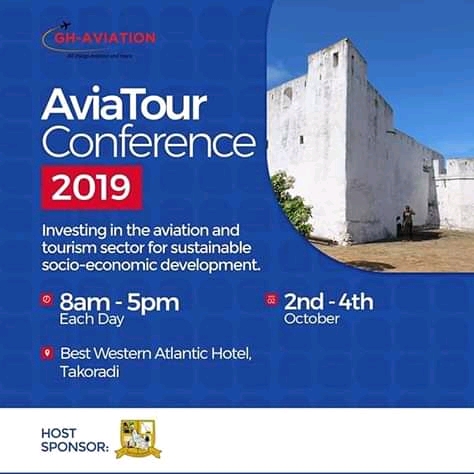
Panelists Unveiled for AviaTour 2019

For Tourism segment, the panel discussion is The challenges faced  by travel and tour operators in packaging Ghana.

For Aviation Segment, the panel discussion is  The government role in the  stimulating the growth of air Services and tourist site to promote tourism in Ghana

AviaTour Conference 2019 is organized by gh-aviation.

Date: 2nd-4th October, 2019
Time: 8am-5pm Daily
Venue: Best Western Atlantic Hotel, Takoradi, Ghana.

OverTourism: What is It, and How can we avoid it?

Since its inception, tourism has been considered a benign activity. The holiday industry’s brings leisure, enjoyment, a break from all responsibility. It has brought wealth to forgotten rural communities, cushioned the blow of financial crashes, conserved critically endangered species and restored crumbling, historic cities. Tourism’s potential benefits are clear. However, the mistake is to think that it can only bring good. Many of us do not believe this myth, and have been speaking out against it for decades. Our concerns were dismissed, until very recently. In summer 2017, the media and the travel industry finally began to turn their gaze to the negative impacts of the holiday industry, and the term ‘overtourism’ was coined.

Overtourism is fast becoming one of the most hotly debated issues in the modern age of travel. Thanks to cheaper air fares, rising incomes and social media's ability to laser focus attention on specific destinations, more travelers than ever before are descending on places that can no longer cope with their own popularity.

In the past few years, the number of destinations raising the alarm over this has steadily increased. In 2018, the Oxford English Dictionary made "overtourism," one of its words of the year -it's defined as an excessive number of visitors heading to famous locations, damaging the environment and having a detrimental impact on resident's lives.

Overtourism is the perceived congestion or overcrowding from an excess of tourists, resulting in conflicts with locals. The term has only been used frequently since 2015, but is now the most commonly used expression to describe the negative impacts ascribed to tourism.

The World Tourism Organization (UNWTO) defines overtourism as "the impact of tourism on a destination, or parts thereof, that excessively influences perceived quality of life of citizens and/or quality of visitor experiences in a negative way". This definition shows how overtourism can be observed both among locals, who view tourism as a disruptive factor that increasingly burdens daily life, as well as visitors, who may regard high numbers of tourists as a nuisance.

Tourism like any other industry, it needs to be managed and regulated locally to prevent the negative impacts.

Overtourism is sometimes incorrectly equated with mass tourism. Mass tourism entails large groups of tourists coming to the same destination. While this can lead to overtourism, there are many destinations that host millions of visitors, yet are not seen as suffering from overtourism.

Causes of overtourism
Three main issues related to excessive tourism growth were recognized: (1) Too many visitors; (2) Too much disturbance (e.g. noise); (3) Too much physical impacts (e.g. touristification and destruction of nature). Overtourism is observed mostly, but not exclusively when the number of visitors to a destination, or parts thereof, grows rapidly in a short space of time. Also, it is most common in areas where visitors and residents share a physical space.

What can tourists do to avoid overtourism?
Responsible tourism refers to tourism which creates better places for people to live and to visit with the emphasis on ‘to live’. Therefore, by definition, it is the opposite of overtourism, which diminishes the quality of life for local residents and creates a negative experience for visitors. Overtourism is sometimes simply a case of numbers: there are too many people in a particular place at a particular time. But in some cases, taking a more responsible approach to tourism can mitigate the negative effects. In these cases, the solution can be to travel as a responsible tourist; to travel in ways which maximise positive impacts and minimise the negative ones.

And whenever you travel, try and ensure as much of your cash stays as local as possible. Stay in locally owned guesthouses; eat at local restaurants and take tours with local guides. Tourism can still be very much a force for good, and ensuring that local residents, habitats and wildlife benefit from your presence is an important part of that.

Travelling responsibly, in smaller numbers, not only helps avoid overtourism. It will give you a greater connection with local people and ways of life: a far more authentic holiday experience.

Overtourism may seem like a new concept, but there are many examples around the world of how it has been successfully avoided, dating back years.

Monday, September 23, 2019

Dubai’s Emirates to delay Premium Economy launch

Delay comes as Boeing postpones delivery of 777X jets

Emirates airline will delay the launch of its Premium Economy cabin class by around six months as a result of a setback in the delivery of new Boeing 777X aircraft.

Tim Clark, president of Emirates airline, said that while the Premium Economy was set to debut on the 777X’s in June 2020, that timeline has had to be pushed back, and the new seats will now hopefully debut in December on Airbus A380 jets instead.

The delays come as Boeing postpones the launch of its 777X aircraft, which were originally set to take off on their first flight in the summer, amid problems with the model’s General Electric-made engine. Emirates has 150 orders of the 777X jets and will be the first customer to receive the model.

“[Premium Economy] will be a beautiful product, but whether or not we can apply it in a ubiquitous manner across the network is something else … but people will see it as it comes out and it’s going to be really good,” Clark told reporters on Sunday.

Asked when Emirates is expecting to receive 777X jets, he said, “That’s a good question. You need to ask Boeing that. We have 150 [aircraft] in contract. The first one should have been arriving in June of next year, but I would suggest quite strongly that it won’t.”

Clark said that there hasn’t yet been any resolution regarding the GE engines, putting the deliveries on hold.

Dubai Aerospace gets $1.4 billion investment mandate


DAE to acquire and manage aircraft on behalf of the unidentified investor

Dubai Aerospace Enterprise (DAE), the Middle East’s biggest plane lessor, received a mandate to acquire and manage aircraft worth about $1.4 billion (Dh5.14bn).

The multi-year mandate by the investor, one of the world’s largest fund managers, will target narrowbody and widebody jets that DAE will source through its secondary market trading and sale-leaseback channels, DAE said in a statement on Monday, without identifying the investor. The plane lessor has already acquired a quarter of the portfolio.

"DAE is thrilled to have the opportunity to grow its managed aircraft business by sourcing and managing aircraft for a world-class financial institution," Firoz Tarapore, DAE's chief executive, said.

DAE's Aircraft Investor Services (“AIS”) unit will manage the assets on behalf of the investor. The mandate will also involve assisting the investor with the capital structure for the acquired aircraft

The mandate will bring DAE’s managed portfolio to more than $2.7bn in assets under management, it said. Along with other ongoing projects, DAE expects its managed portfolio to grow to its target of $5bn.

The plane lessor owns more than 300 aircraft and will manage more than 100, as it continues talks with 250 client airlines, Mr Tarapore said.

"This scale and relevance combined with our 150-person full-service platform and our industry leading AIS offering is a very compelling value proposition for investors in the managed aircraft space” Mr Tarapore said.

State-controlled DAE recorded a 1.2 per cent dip in second-quarter profits. Net income attributable to shareholders for the three months ending June 30 fell to $98.2 million (Dh360m), from he prior-year period.

DAE has a long-term Issuer default rating of "BBB-" with a stable outlook from Fitch Ratings.

After the company repurchased shares held by Emaar Properties, it is now fully owned by the Investment Corporation of Dubai (ICD).

Last month DAE said it raised $490m from three loan agreements, with maturities ranging from three to seven years, to finance its growth plans.

Source: theNational.ae

Saturday, September 21, 2019

737 MAX software upgrade to be tested in simulator by new FAA chief

New Federal Aviation Administration (FAA) chief Stephen Dickson is heading to Seattle this week to visit Boeing and fly in a Boeing 737 simulator. The simulator will incorporate Boeing’s latest software ‘fix’ which will receive input from both angle-of-attack sensors in the 737 MAX’s MCAS anti-stall system.

However, this is not part of any certification process which will be required by Boeing before the beleaguered aircraft can once again take to the skies. Neither the FAA nor Boeing have yet given any clear timeline for the likelihood of such an event. According to Reuters news agency, Boeing has said it planned to conduct a certification test flight in the “September time frame” but Boeing Chief Executive Dennis Muilenburg did not give a specific date when asked last week. In addition to the simulator flight, Dickinson will also be meeting with the FAA aircraft certification team based in Seattle.

Separately, Boeing has recently declined an invitation to testify at a House Transportation Committee hearing. “Boeing is working diligently and transparently with committees in both the House (of Representatives) and the Senate to ensure that proper information is being shared and we will continue to do so,” the company made clear in an e-mailed statement. It was reported last month that the committee review would find the company needs to reorganize its engineering reporting lines company-wide and ensure higher ranking officials, including its CEO, get faster feedback about potential safety concerns from lower levels of the company.

Federal prosecutors aided by the FBI, the Department of Transportation’s inspector general and a number of blue-ribbon panels are investigating the 737 MAX as well as how the FAA certifies new aircraft.

IATA 2019 Regional Aviation Forum Report: Value of Aviation for Africa

Value of Aviation for Africa
If we zoom out and look at the potential of Africa as a continent, it is huge. Aviation plays an extremely important role in supporting Africa’s socio-economic development.

It also plays a central role in achieving 15 out of 17 United Nation’s Sustainable Development Goals. In fact, I am pleased to announce that IATA will soon launch a report on the role aviation plays in achieving the UNSDGs for Africa and the Middle East.

Currently, air transport supports 6.2 million jobs and $55.8 billion in GDP in Africa. Over the next 20 years, demand for air transport is expected to double, with annual growth of 4.6% – the second fastest of all IATA regions. This translates to an extra 190 million passenger journeys per year in 2037 for a total market of 334 million passengers. Cargo volumes are also expected to double over the next 20 years.

While it is evident that aviation in Africa has the potential to fuel trade and economic growth, several barriers exist. These challenges will be addressed in detail in today’s sessions starting with infrastructure.

1. Infrastructure
Africa’s expected growth in demand for air transport, both passenger and cargo, will create the need for fit for purpose infrastructure. When a decision is taken to develop an airport, it is imperative to involve airlines as the end users in the planning phase to ensure what is being developed is fit for purpose.

We have seen many examples of unwarranted capital expansion such as in Angola where a multibillion-dollar airport project remains unutilized.
On the other hand, we have examples of underinvestment in airport infrastructure where there is demand, such as the case of Nairobi.

Furthermore, runway utilization in Africa most recently stood at only 19% with little progress in recent years on increasing the usage. This begs the question, why do airports in Africa insist on building more runways in Africa?

High taxes and charges are a major issue for Africa. These are often viewed as guaranteed revenue streams for Governments which has led to unnecessary increases in airport charges. Passenger taxes, VAT and Solidarity taxes, as well as Air Navigation and Airport charges make intra-African travel 45% more expensive than the world average.
IATA advocates strongly for governments to have Economic regulation as part of the national legislation to protect the interests of users and ensure long-term socio- economic gains from the industry. A notable leader in this case is South Africa, where a robust competition and regulatory body exists overseeing capital expansion and user charges, aligned with the Airports Company of South Africa, which engages with the industry on development, charges and service levels.

2. Capacity Building
However, efficient and cost-effective infrastructure cannot be achieved or sustained without a skilled and trained workforce. By 2037, Africa will need 29,000 pilots, 28,000 technicians and 29,000 cabin crew. That’s a significant number that we need to attain in less than 20 years.

Africa is competing in a global market for skills but suffers from frequent periods of “brain drain“ as its best talents leave the continent to seek better opportunities. The industry is dependent on African governments to partner with industry associations and training institutions, and put in place the right environment to create the future talent that the sector needs.
Through the IATA Airline Training Fund in Africa – over 2500 young African aviation professionals benefitted in 2018 from aviation training. The capacity building efforts also focus on the importance of diversity. In this area, Africa is a leader, with women at the helm of four airlines. To further support women’s leadership in aviation, the “IATA Women in Aviation Diploma“  Program was launched in Johanesburg last year - 22 female airline executives participated.

3. Safety
The overarching priority tying  discussions together is safety. It’s the industry’s top priority in every region. Tragically, Africa suffered the loss of Ethiopian Airlines ET302 in March. However, 2018 marked the third successive year in which there were no African airline jet hull losses or fatal accidents. And Last year, Africa was the only region to see a decline in the all accident rate compared to 2017.
This is great progress. We need to continue this momentum and we urge governments and industry to collaborate to ensure ICAO standards and recommended practices are met. Tools that help enhance safety levels are the IATA Operational Safety Audit (IOSA) and the IATA Safety Audits for Ground Operations (ISAGO), which international accepted standards to complement the national safety oversight.

Air Traffic Management is also a major safety and efficiency issue that needs to be addressed. With the technology that we have available we have the opportunity to fully realize the potential for a seamless and harmonised airspace over Africa. However, without a commitment to work together as ANSPs, states and airlines, we will be unable to achieve harmonious airspace infrastructure. The session on Safety and Flight Operations will address the issues of aeronautical information, contingency planning and the use of drones.

Collaboration
I want to end on a very important theme for IATA and that is collaboration. We must ensure a strong dialogue and partnership between government and the aviation industry if we are to deliver the economic and social benefits to our citizens. No State or airline can deliver the full benefits that aviation offers by operating alone; competition is part of our business, but collaboration and cooperation must be the common denominator upon which we all operate.

Collaboration between airlines is also crucial if we want to improve connectivity and increase the share of African carriers moving traffic to, from and within Africa

Closing
Mr Muhammad Ali Albakri, regional vice president, Africa and Middle East closed by saying: “We have a very tight schedule, so please allow me to end my opening remarks here and close by reminding us all that aviation is the key to unlocking the prosperity of our dear continent and nations. Once again, our sincere thanks to our co-host Kenya Airways and to our sponsors for their immense support towards this event.”
Source: AfricanAerospace.aero

IATA 2019 Regional Aviation Forum: Aviation in Kenya

Aviation in Kenya

Air transport has been a major driver in Kenya’s economy, boosting tourism, attracting regional headquarters of multinational companies and fostering trade, logistics and foreign investment in the country. When it comes to visa openness, Kenya ranks 12th globally. With more than 4.7 million passengers arriving to Kenya’s airports every year and the country’s established position as the leading cargo hub for East Africa, there is good reason to be proud of all that aviation has achieved in the country.

In fact, IATA has recently published a study on the value of aviation for Kenya, and the numbers really speak for themselves. In 2017, aviation and tourism contributed USD 3.2 billion in GDP. It accounts for 4.6% of Kenya’s GDP and supports 410,000 jobs. Over the next 20 years the Kenyan market could more than double in size, resulting in an additional 11.3 million passenger journeys, over 449,000 more jobs, and a $11.3 billion boost to GDP by 2037.

But to continue this growth sustainably, IATA identified four areas where government action can promote aviation’s growth and bring even more value to Kenya:

1. Improve air transport infrastructure to accommodate the future growth of air traffic in collaboration with users : Improving operational efficiency at Jomo Kenyatta International Airport is essential if Nairobi is to remain a competitive connecting hub and East Africa’s main air cargo hub.

2. Implement the Single African Air Transport Market (SAATM) : SAATM will open Africa’s skies. We welcome Kenya’s commitment to SAATM and urge the government to implement it by making its regulatory framework statutory.

3. Improve safety: Improvements in the safety performance of Africa’s turboprop fleet remain a priority - including in Kenya. The IATA Standard Safety Assessment Program (ISSA) enhances and complements the state’s safety oversight role

4. Adopt new innovative technology: Integrating technology such as biometrics and AI will improve efficiency and passengers’ journey experience

Source: AfricanAerospace.aero

Friday, September 20, 2019

Moscow Sheremetyevo Becomes Russia’s First Three-Runway Airport


The new, third runway of Moscow’s Sheremetyevo Airport (SVO) welcomed its first regular flight on September 19, making SVO the first major airport in Russia to be equipped with three landing and take-off strips.

Runway-3 is located north of the airport’s so-called new Northern Terminal complex (comprising of Terminal B and C1, which is currently under construction), whilst the two existing runways of the country’s biggest airport are located between the Northern and Southern Terminals (D, E, F) complexes.

Runway-3 is poised to increase the capacity of Sheremetyevo from 65 to 90 take-off and landings per hour. The first two runways are too close to each other to allow simultaneous operations, and one has fallen into serious disrepair so that, when the new runway-3 is fully introduced, it will be closed for reconstruction.

The new runway and the new Terminal B are connected by a bridge, the first such piece of airport infrastructure in Russia to be used for the re-positioning of airliners. The bridge can withstand all types and sizes of aircraft, including the Airbus A380, Sheremetyevo insists.

Runway-3 has been under construction since 2011 at the expense of the national budget, and was originally intended to be open in time for the 2018 FIFA World Cup hosted by Russia. During the course of construction the cost of a new runway has risen from 35 billion to 55.7 billion roubles (US$857 million).

One of the primary beneficiaries of the new runway will be Russian flag carrier Aeroflot, which has Sheremetyevo as its base airport. Furthermore, in the autumn of last year, Russia’s largest airline grouping transferred some of the flights of its Rossiya Airlines affiliate from Vnukovo to Sheremetyevo, thereby providing SVO with additional business and further strengthening its leading airport position.

With its three runways, Sheremetyevo, already the country’s busiest gateway, plans to increase its passenger service capacities to 65 million people annually by 2030.

Source: Aviation voice

Airbus forecasts number of planes to double in next 20 years

Airbus forecasts number of planes to double in next 20 years

European plane maker says air traffic is expected to grow by 4.3 per cent per annum

The number of passenger and freighter aircraft is set to more than double in the next 20 years to about 48,000 due to increased demand, Airbus said on Thursday.

Air traffic is expected to grow at 4.3 per cent annually, resulting in a need for 550,000 new pilots and 640,000 new technicians, despite an economic slowdown.

“The 4 per cent annual growth reflects the resilient nature of aviation, weathering short-term economic shocks and geopolitical disturbances. Economies thrive on air transportation. People and goods want to connect,” said Christian Scherer, Airbus chief commercial officer and head of Airbus International in a statement.

“Globally, commercial aviation stimulates GDP growth and supports 65 million livelihoods, demonstrating the immense benefits our business brings to all societies and global trade.”

Of the forecast 47,680 fleet, 39,210 are expected to be new planes with 8,470 remaining from today's fleet, it said in statement.

Airbus said despite economic shocks, air traffic has more than doubled since 2000 and is playing a key role in connecting large population centres, particularly in emerging markets where people's inclination to travel is among the world’s highest.

“Today, about a quarter of the world’s urban population is responsible for more than a quarter of global GDP, and given both are key growth drivers, aviation mega-cities will continue to power the global aviation network,” Airbus said.

“Developments in superior fuel efficiency are further driving demand to replace existing less fuel-efficient aircraft.”

Airbus is updating fleets with new, fuel-efficient aircraft such as the A220, A320neo Family, the A330neo and the A350. The company has said it is attempting to achieve 'carbon neutral growth' from 2020, while connecting more people globally.

Earlier this year, Saudi Arabian Airlines signed an agreement with Airbus to expand its A320 Neo-family fleet to as many as 100 jets, including the new longest-range narrowbody aircraft, as demand for air travel in the biggest Arab economy grows. The kingdom's budget operator, flyadeal, has also ordered 30 A320neo aircraft , with an option to buy 20 more, after ditching an order with Boeing for the troubled 737 Max narrowbody jet.

Thursday, September 19, 2019

World Tourism Day 2019: Host Country, India Official Message


Prahlad Singh Patel, Minister of State (IC) for Tourism & Culture, Government of India Message

India is pleased to host the official celebrations of United Nations World Tourism Organization (UNWTO) World Tourism Day in New Delhi. 

The theme of this year’s World Tourism Day ‘Tourism and Jobs: A better Future for All’ is highly appropriate as tourism is extremely labour intensive and significant source of employment for many global economies.

Tourism is one such activity which extends to various other sectors and thus is responsible for creating direct and indirect employment requiring varying degrees of skills and allows for quick entry into the workforce for youth, women and poor. The tourism sector therefore is not only an engine for economic growth but also an effective tool for poverty alleviation among the marginalised segments of the society.

We believe that development of tourism is directly linked with community development. We want the local population to benefit by the development of tourism in their region and for this we should focus on development of soft skills among the locals.

In the process of job creation, let us ensure that our strategies for development of tourism are not in conflict with the environment and have minimal negative impact. When we talk about sustainability we should not only talk about conservation of resources but also our culture and heritage, which we have adopted in India through our Sustainable Tourism Criteria.

On behalf of the Ministry of Tourism, I would like to express my gratitude to UNWTO for choosing India as the host for this year’s World Tourism Day I am hopeful that together with the experts from tourism field, we will be able to highlight the challenges and opportunities of employment in Tourism sector and find solutions to the issues of employments in Tourism.
I look forward to receiving you in New Delhi!

World Tourism Day 2019:Official Message by the Secretary-General, UNWTO


“Tourism and Jobs: A better Future for All”  World Tourism Day 2019
Official Message by the Secretary-General, UNWTO

Tourism can help us build a better future for everyone. Around the world, the tourism sector is leading source of employment, supporting many millions of jobs and driving economies forward, both at the local and the national level.

At the same time, it is a catalyst for equality and inclusivity. In many places, tourism employment gives women, young people and those living in rural communities the chance to support themselves and their families and to integrate more fully into wider society.

The true potential of tourism, both as a creator of jobs and as a driver of equality and sustainable development, is only just being realized. Providing decent work opportunities and contributing to developing professional skills are at the heart of this. Well managed, the continued growth of our sector will encompass countless opportunities and allow tourism to live up to its global social responsibility to leave no one behind.

Not one single economic, social or human activity prospers in isolation. For this reason, governments and stakeholders from the public and private sectors are increasingly working together to manage tourism in a responsible and sustainable manner and to ensure its enormous potential is properly realized.

Just as new technology is changing the way we travel, so too is it changing the way we work. Tourism is leading the way in providing workers with the skills and knowledge they need for the jobs of tomorrow. Embracing this creative spirit, including through effective collaboration with partners in the technology sector and in academia, will drive the creation of more and better jobs.

As we celebrate World Tourism Day, let us recognize the transformative power of tourism. Together, we can realize tourism’s potential to build a better, more equal future.

Kenya Airways cancels flights due to ongoing pilot shortage

Kenya Airways (KQ, Nairobi Jomo Kenyatta ) was 62 pilots short in the first two weeks of August, a factor that was partly to blame for 91 flight cancellations during the period, the loss-making carrier has admitted in an internal letter seen by Reuters.

Pilots and engineers have been leaving the loss-making 48.9%-state-owned carrier, in particular to deeper-pocketed Gulf carriers, the news agency said. Of the 91 cancellations, 68 (74%) were due to pilot shortages, according to the document, which added that more were likely in the weeks ahead.

“The market share we have fought hard to win shall be eroded and winning this back will be a much harder task due to diminished customer confidence,” the flag carrier’s management said in the letter to the Kenya Airline Pilots Association (KALPA).

Kenya Airways has 435 pilots, against a fleet requirement of 497, and is currently in the process of recruiting 20 new pilots for its B737 fleet on two-year contracts. Ten existing pilots will be promoted to the cockpits of the carrier’s B787-8 s.

The document said that cargo customers had been leaving the airline due to frequent cancellations of flights scheduled with the airline's two B737-300(F) s. It added: “The projected impact of the crew shortage is USD50 million annually, which could have been avoided.”

However, KALPA blamed the airline for not recruiting fast enough, saying in a statement on September 10: “It is no secret that Kenya Airways has one of the lowest rates of pilot recruitment in the world.”

According to the ch-aviation fleets advanced module, besides the two freighters, Kenya Airways' current fleet includes two B737-700 s, eight B737-800 s, nine B787-8s, and fifteen E190 (AR)s. Its subsidiary Jambojet operates five Dash 8-400 s, one of which is wet-leased to Kenya Airways.

About Kenya Airways

Type
Scheduled Carrier

Base
Nairobi Jomo Kenyatta

Aircraft
38

Destinations
58

Routes
80

Daily Flights
160

Source:ch-aviation

AviaTour Conference 2019


The AviaTour Conference is an annual event geared towards bridging the gap between aviation and tourism for sustainable socio-economic development

This event will bring together experts and industry stakeholders in the aviation and tourism industry (Airlines, hotels, travel and tours, ground handling services, airports, road transportation etc)

The theme for 2019 is investing in the Aviation and tourism sector for sustainable socioeconomic development

The AviaTour Conference 2019 will take place between 2nd and 4th October, 2019 at the Best Western Plus Atlantic Hotel, Takoradi-Ghana

Come, network and learn how to package Ghana and sell to the world.

This three day event is packed with a tour, welcome reception, gala and awards night, masterclass, insightful panel discussions and great speakers and delegates to network with.

*Click here and Register now*!!!

Tourist Demand

TOURIST DEMAND

A common approach to studying of tourism is to divide it into the broad areas of demand and supply, and then examine each separately.

The demand-side is the market for tourism attractions and facilities. It includes the reasons why people choose to travel, and why they prefer some activities over others. Looking at it from a particular destination’s point of view, it is knowing who the client or market is for a place.

The supply-side of tourism refers to the destination resources that are available for the tourist and recreationist. These include facilities and attractions of all kinds (such as sports fields, parks, beaches and entertainment), as well as supporting infrastructure
(such as transportation, hotels and restaurants) and services (such as travel agents, and recreation programs and activities).

To market effectively, the needs of the consumer must be identified. In a demand-driven model, tourist motivations influence the development of a destination.

What we know of as tourism, for example, would not exist if we did not have both tourists and destinations or attractions. The tourist shapes the destination because the destination must respond to the tourist’s presence in some way. And the destination is shaping the tourist by generating expectations, motivations and experiences that would not exist if that particular destination, and its interpreters(tour guide), did not exist.

Source: World Geography of Travel and Tourism.

Wednesday, August 14, 2019

Financing Airport Infrastructure In Africa

Financing Airport Infrastructure in Africa.
Africa is said to present the fastest Growing Aviation environment for the the Future but this is not possible without Guided Investment. Sourcing for these needed investment has been the problem in Africa. To tap Into the potential available in the Continent, there is a need to tap Into this huge opportunities available.

To finance airport infrastructure in the continent,it must be done in the most cost-effective way. "We are, therefore, open to the private sector as we realise we have to increase the capacity into our airports. Public-Private Partnerships (PPSs ) play an important role," said by Fundi Sithebe, ACSA chief operating officer, on Friday 26th of April, during a panel discussion on financing airport infrastructure in Africa at AviaDev Africa Conference 2019 in Cape Town.

According to Airport Council International,it projects that Aviation in Africa grew to 6.3% between 2016-2017, 195 million passengers in 2017. A study shows that Aviation adds $80 billion in GDP and 7 million jobs in 2017 to Africa economy. According to projections from the International Air Transport Association, the African continent will become one of the fastest growing aviation regions within the next 20 years, with an average annual expansion rate of almost 5 per cent. With this, the future appears to be promising for aviation industry in Africa.

No alt text provided for this image
The availability of efficient airports in Africa is the key to influence an investor’s decision on whether or not to invest in African Aviation industry since air transport enables faster commute.

Stakeholders and investors expect an efficient Airport should have Spacious terminals, Parking aprons for aircraft, Check-in desks, Boarding gates, Good Runways, Improved and efficient technology (CCTV installations), Modern Baggage Carousels and Efficient Ground Handling services

In dealing with these developments, it is imperative that airport managers in Africa consider the upgrading and expansion of their Airports.

Trends such as Liberalization of air transport services which brings Changing traffic patterns due to changing flight routes and Increase in passenger traffic. Also, Airport Infrastructure Requirement for new aircraft calling for runway improvements and expansion. E g: A380 should be considered .

The modernization of airports in Africa is central to enhancing the passenger experience and providing efficient and sustainable facilities. Quality aviation infrastructure in Africa should enable more efficient access and mobility; improve safety, reliability and resilience; respond to the diversified needs of providers, users and consumers; enhance environmental performance; and ultimately support the on-going transformation to a more sustainable aviation sector in the Continent.

Stakeholders and private sector investors will consider profitability and want to be sure their investment will bring the benefits expected.

The International Civil Aviation Organisation (ICAO) President, Dr Bernard Olumuyiwa Aliu said at the 59th Airports Council International (ACI), African Regional Conference in Lagos that Financial institutions are not funding aviation infrastructure in many African countries, including Nigeria.

No alt text provided for this image
He said global investors were seeking stable policy, regulatory and enabling environment where there is fidelity with agreements on airport infrastructure funding and the tenure of such projects for the investor to recoup his money.

He further said “No investor or financial institution wants to project their proposed returns based on eventuality, only to see those goal posts being moved by a government half-way through a project after they have made their financial commitment.”

He said until issues of uncertainties about investment in aviation infrastructure were resolved, African countries must work out models that are sustainable in closing the gap in airport facilities.

He said:” The priority is for airport operators, in coordination with states, to demonstrate where financing is required. This can be accomplished through gap-analyses of forecast demand, future capacity need and current infrastructure deficiencies.”

He called on African countries to look beyond cost recovery measures in the management of airports terminals, by considering other ways of enhancing revenue, other than flight activities.

The Investors Challenges are Governmental Influence and Currency Mismatch, Currency Risk, Operational Risk, National and political Risk, Passengers Volume and Public-Private Partnership (PPP)

Innovative Strategies to Finance Airport Infrastructure in Africa should include  Low Cost Carrier Terminals, Privatization and Public Private Partnerships, Alternative Funding Sources and Flexibility

How to get funding?

The Trade and Development Bank has financed a number of aviation infrastructure projects ranging from short term aircraft purchase pre-delivery payment financing to medium and long term financing of infrastructure projects in Eastern and Southern Africa. More recently, the Bank has also financed airport renovation and development. Also, African Development Bank may finance the acquisition of single aisle aircraft.

 Conclusion

 Air transport was originally financed by public subsidies. The industry has now grown to the point where it is expected to be a self-supporting sector. As a result, today’s Airport Managers in Africa need a wide range of financial skills in order to function effectively as well as access to adequate funding in order to meet continually changing demands.

Monday, July 8, 2019

Tourism Expenditure

Tourism Expenditures


Anything that can be purchased is a commodity. By creating tourist attractions, the tourism industry tends to commodify almost all aspects of the contemporary world. This is known as commodification.

The UNWTO has defined a  tourism commodity as  any good or service for which a significant portion of demand comes from persons engaged in tourism as consumers.

Significant portion is not defined, however, if we assume that this is more than 50 percent, then a tourism commodity is any product or service for which at least 50 percent of the buyers are tourists. (Depending on the product, service and place, the tourist demand could be less than 50 percent.)

Furthermore, almost anything can become a tourist attraction, with the right marketing.

Attractions
can include forms of transportation (e.g., San Francisco ’s Cable Cars), food and beverage (e.g., wine tourism in California).

The magnitude of tourism as an economic activity in a destination is usually measured primarily by estimating the total expenditures made by visitors in the course of at trip(or on behalf of a visitor, such as contracts with a hotel made by a tour operator inassembling a tour for sale).

A few purchases before and after a trip can be considered part of the trip ’s expenses, such as the purchase of consumables made immediately before departure, such as gas for the car, and expenditures such as the dry
cleaning of travel clothes immediately after the trip.

Tourist Motivation

Tourist Motivation


There is no one approach or model that is widely accepted as the standard for
assessing tourist motivation. This is due to the diverse combination of products and experiences that comprises the tourism industry, and the associated wide range of tourist interests and needs. Motivations and needs also change over time, such as over
the course of a lifetime, from one trip to the next, and from one activity to the next on the same trip.

In addition, many tourists are not aware of what motivates them to
take a certain trip or visit a particular attraction, except in the most general of terms which typically include recreation, relaxation, education and escape from their work-a-day world.

One example of a tourist motivation model that incorporates significant elements of supply is that suggested by Mayo and Jarvis (1981). They proposed that travel motivation can be divided into the following four types, based on what the tourists most wish to gain, see or experience in the trip. More than one of these can occur at the same time, though one tends to be more prominent than the others for any single trip.

1. Physical Motivators: The desire for physical rest, sports participation, beach recreation, relaxing entertainment and health considerations.

2. Cultural Motivators: The desire for knowledge of other countries, including their music, art, folklore, dances, paintings and religion.

3. Interpersonal Motivators: The desire to meet new people; to visit friends or relatives; to escape from routine, family, or neighbors; or to make new friendships away from the home setting; to experience anomie (which refers to social interactions in an anonymous setting).

4. Status and Prestige Motivators: The desire for recognition, attention, appreciation and a good reputation among family, friends and acquaintances in the home setting. (This is also referred to as ego enhancement.)

The advantage of this approach is that participation in specific activities can be used to classify motivations. Visitation to a museum is, therefore, an indication of a cultural motivation, while going to a beach would be a type of physical motivation.

The attachment of motivation to activities facilitates the easy collection of data on tourist behavior at its most apparent level, making this approach preferred by local and national tourism boards

Travel Journalism

Travel Journalism

Travel journalism is not travel writing. Nor is it travel blogging. Travel journalism is a writing form all its own. Even though travel journalism is often dubbed as a lesser form of journalism, it is indeed an important medium of information, especially as our world shrinks with globalization.

Travel journalism must stay factual and the authors must strive to be non-biased in order to decrease the feeling of “us” versus “them” among peoples, reduce miscommunication whether in  businessor between locals and travelers and to help readers understand the culture and importance of a place they visit.

A travel journalist must go beyond writing reviews of a festival, museum, or hotel, attraction and tourist site.

Travel journalists must explain what each of these things means to a culture Travel writing appeals to tourists, while travel journalism appeals to travelers those who want to authentically understand other cultures