Translate

Thursday, May 28, 2020

Boeing resumes 737 Max Production

Boeing has resumed production of the 737 MAX at the company’s Renton, Washington factory. The 737 program began building airplanes at a low rate as it implements more than a dozen initiatives focused on enhancing workplace safety and product quality.

“We’ve been on a continuous journey to evolve our production system and make it even stronger,” said Walt Odisho, vice president and general manager of the 737 program. “These initiatives are the next step in creating the optimal build environment for the 737 MAX.”

During the temporary suspension of production that began in January, mechanics and engineers collaborated to refine and standardize work packages in each position of the factory. New kitting processes will also ensure that employees have everything they need at their fingertips to build the airplane.

“The steps we’ve taken in the factory will help drive our goal of 100 percent quality for our customers while supporting our ongoing commitment to workplace safety,” said Scott Stocker, vice president of 737 Manufacturing.

The 737 program will gradually ramp up production this year.

Tuesday, May 19, 2020

COVID-19 response: Airline industry struggles to come up with a standard approach.


Flights resume but there is no clarity yet on operating procedures.

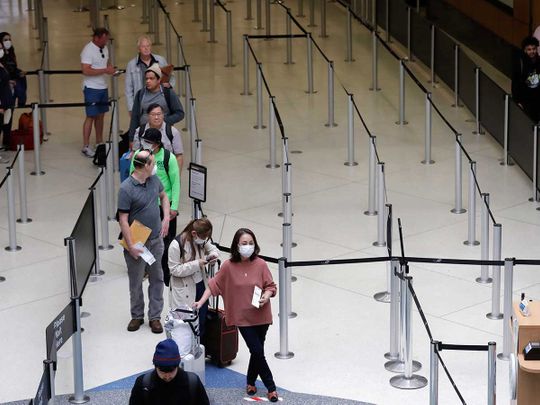
Airport passengers
Face masks everywhere... but airlines and civil aviation authorities are yet to come with a one standard for all approach. Image Credit: AP

Reuters: In Thailand, you cannot have food or water in flight and must wear a mask. In Malaysia and Indonesia, the plane needs to be half-empty.

In the US and Europe, it's not mandatory for airlines to leave the middle seat open.
Measures to stem the spread of coronavirus have changed how people travel, as Beijing resident Feng Xuel found when she took a domestic flight this month. The aircraft was full - allowed under the Chinese rules.

"We needed to wear a mask during the flight and there were PA announcements basically asking for our cooperation with these anti-virus measures put in place, which made me a bit nervous," Feng said. "You also need to go through a lot of temperature checks and security checks when you leave the airport."

Mishmash of requirements
Travellers, airlines and airports are grappling with a hodgepodge of rules put in place during the pandemic that will make flying different in almost every country.

"When flying restarts, you are already working against the clock. There is still a latent fear of travel," said Subhas Menon, head of the Association of Asia Pacific Airlines. "It's not going to be such a smooth passage when you travel because of all of the measures that are going to be introduced."

A little more than a year after uneven national responses to the grounding of the Boeing 737 MAX, the industry is once again facing piecemeal regulation. The last trigger for such widespread changes in the way airlines operate was the 2001 attacks in the United States, which ushered in new security measures.

Common standards, please
"People globally have understood the security requirements that came after 9/11. We would like to see that kind of standardisation of protocols," said Boeing vice-president Mike Delaney, leader of Boeing's Confident Travel Initiative.

Onboard service is changing too. Business-class meals, once a selling point for premium carriers hiring celebrity chefs, have been reduced to pre-packaged items on carriers including Emirates, Air Canada and British Airways.

Automation is also increasing, as carriers such as Qantas Airways Ltd ask passengers to check in online to limit contact with staff and other fliers. "More than ever, the industry will work towards the vision of an entirely mobile-enabled journey," said Sumesh Patel of technology provider SITA.

Airlines will find that leaving the middle seat vacant will cut into their financials quite drastically.
Image Credit: Reuters

What of the middle seat?
On the airplane, one of the biggest debates has been over whether middle seats should be empty. That would limit airplanes to two-thirds of their normal capacity, not enough for most airlines to make a profit without increasing fares.

Afif Zakwan recently took a Malaysia Airlines domestic flight that was exempt from the requirement to fly half-empty. He said he was comfortable being on a full domestic flight, but would not consider flying internationally for now.

"As more and more people travel for whatever reason, confidence and the power of word-of-mouth experiences will shape the recovery," said Mayur Patel of data firm OAG Aviation.
An official at the Japan Civil Aviation Bureau said the issue of an open middle seat, which could create unfair advantages if applied unevenly, was "controversial". "It's crucial that countries where flights depart coordinate their responses with countries where they arrive," said the official.

A light touch
Despite the call for common standards, some nations are applying their rules just to airlines registered in their country, while others are applying them to foreign carriers. US carriers are among those requiring passengers and crew to wear facial coverings, and have also endorsed temperature checks.

In Europe, airlines are largely resisting calls to leave the middle seat empty but have publicised other changes designed to reassure passengers.

"You have to remember an aircraft is not the natural place to do social-distancing, so you need to mitigate the health risks by other means, and facial masks are a good example of those means," Finnair Plc Chief Executive Topi Manner told Reuters.

Credit: gulfnews

The UAE Slightly Eases Travel restrictions

The UAE Slightly Eases Travel restrictions; foreign residence visa holders now free to return.

The United Arab Emirates (UAE) has slightly eased its emergency COVID-19 border closures by lifting a restriction on foreign residence visa holders entering the small Persian Gulf country. From June 1, the Ministry of Foreign Affairs and International Cooperation says expat residents will be able to return to the UAE to be reunited with their families after they were effectively locked out of the country.

In its response to stem the spread of the novel Coronavirus, the UAE initially stopped issuing new visitor visas and then suspended its visa on arrival for nationals from 70 different countries on March 18. Officials then went one step further on March 25 by banning the arrival of all passengers into the country except for Emirati citizens.

The authorities have not indicated when travel restrictions might be eased further but there are said to be high-level discussions with some governments about the prospect of introducing mutually agreed “travel bubbles”.

Monday, May 18, 2020

Emirates to trim workforce by 30%

Emirates looks to trim workforce by 30% - over 30,000 jobs may go
Emirateses Group (Emirates) is looking to make substantial cuts in its workforce as it tries to mitigate the financial costs of the COVID-19 pandemic, according to Bloomberg news. 

The Gulf carrier suspended all regular passenger flights in March and like all airlines has struggled to cope, financially, with the approximate 95% drop in demand for air travel on a global basis. While no official announcement has been made, it is expected that Emirates will shelve approximately 30,000 jobs, virtually 30% of its 105,000-strong workforce. A company spokesperson confirmed that Emirates was conducting a review of “costs and resourcing against business projections,” adding that: “Any such decision will be communicated in an appropriate fashion. Like any responsible business would do, our executive team has directed all departments to conduct a thorough review of costs and resourcing against business projections.” 

Emirates is one of the world’s biggest long-haul carriers and has already indicated that it will raise debt to help it through the current financial crisis, though it does not anticipate that air travel will recover for at least eighteen months. It reported a 21% rise in profit for its financial year ending March 31, but admitted that the pandemic had damaged its fourth-quarter performance.

Credit: AviTrader

Friday, May 15, 2020

IATA opposes quarantine measures for arriving travelers

This week the UK has announced a mandatory 14-day quarantine as part of its plans when easing its lockdown. There are few details about how long and under what conditions. Similarly, Spain announced a 14-day quarantine measures on arrival would be in place there until at least 24 May and possible longer. IATA's Director General and CEO, Alexandre de Juniac said that international travel cannot re-start under such conditions. In a recent survey that IATA did in 11 markets, 84% of travelers said that quarantine measures was one of their top concerns, and 69% essentially said that they would not return to travel under such conditions.

De Juniac stated that: "Our top priority is to re-start this industry safely. We are proposing a series of measures that we believe will give governments the confidence to re-open their borders. It is a risk-based layered approach to biosecurity that needs to be coordinated globally. That’s important. The arriving country must be confident of the procedures in place at the departing airport. And travelers will need the reassurance of common measures.

In the risk-based layered system that we are proposing there are temperature checks and other measures at departure to keep symptomatic travelers from flying. And a robust government managed system of health declarations and rigorous contact tracing can manage the risk form asymptomatic travelers. We oppose quarantine measures because the combination of these measures, if well-implemented globally, can manage the risks."

IATA is working with ICAO and other stakeholders to put in place an agreed risk-based layered system quickly to safely and efficiently restore global connectivity.

Credit: AviTrader

EASA offers financial relief to aviation companies

The European Union Aviation Safety Agency (EASA) has agreed on concrete measures that will offer financial relief to companies in the aviation industry whose business has been severely impacted by the COVID-19 crisis. These measures take account of the continued sustainability of EASA and have been agreed with the support of the European Commission.

The Agency will for a limited period not charge interest in cases of late payment, as provided for in Article 4.3 of the Fees and Charges Regulation. For all invoices issued between February 1, 2020 and June 30, 2020, the late payment clock has been stopped and will restart only on July 1, 2020. July 1, 2020 will be considered as the 31st day of payment and therefore late payment interest will be applied from that day.

EASA will postpone the issuance of its regular invoices for annual fees for two months, from June to August. The annual invoices will be issued on August 1, 2020 and late payment interest will apply from the 31st day (so from August 31, 2020). 

Credit: AviTrader

Wednesday, May 13, 2020

Embraer delivers five commercial and nine executive jets in first-quarter 2020

Embraer delivered a total of 14 jets in the first quarter of 2020, of which five were commercial aircraft and nine were executive jets (five light and four large). As of March 31, the firm order backlog totaled US$ 15.9 billion.

Historically, Embraer seasonally has fewer deliveries during the first quarter of the year, and in 2020 in particular, the commercial aircraft deliveries in the first quarter were also negatively impacted by the conclusion of the separation of Embraer's Commercial Aviation unit in January.

During the first quarter, Embraer Executive Jets announced that the new Phenom 300E was granted its Type Certificate by ANAC (National Civil Aviation Agency of Brazil), EASA (European Union Aviation Safety Agency) and the FAA (Federal Aviation Administration). The new Phenom 300E is the recently enhanced version of the Phenom 300 series, which was the most delivered business jet series in the 2010s.

Credit: AviTrader

Lockdown: Airlines Grounded as COVID-19 Transforms Aviation

The COVID-19 pandemic has transformed how we travel and come together. As streets and buildings became empty and people practice social distancing, so too have airports experienced a tremendous decline in passengers and flights. As the aviation industry shaped globalization, it has also contributed to how quickly the disease spread. In a new aerial series, photographer Tom Hegen explores the pandemic's impact on aviation from above.
As Hegen explains in the project's brief, since the beginning of civil aviation, goods and people could be transported faster across the continents. But this intensive networking of the world also means that diseases are spreading faster than ever before. Due to globalization, the coronavirus was able to spread to all parts of the world and shut down public life. In April 2020, worldwide air traffic fell dramatically. At many airports around the world, runways are closed and used as parking areas for grounded aircrafts. The airplanes that were once a symbol of globalization have become a symbol of the current lockdown.

In the same vein as Hegen's work, The New York Times recently published a piece called " The Great Empty ", showcasing a new side to urban life. From Times Square to the Place de la Concorde in Paris, photographers are capturing these "empty cities" in a defining moment across the globe. Hegen believes that as a global society, we can learn from this crisis: the global supply chains that are currently interrupted should be reconsidered, and perhaps, production can be brought back to the country where the products are sold.

With the rise of both self-imposed and mandated social distancing, as well as global turn towards remote work, COVID-19 has shaped how travel and how we work . With architects, educators and designers taking stock and looking to the future, there are major lessons that will come out of this crisis. From telecommuting and distance learning to virtual events, designers have quickly rethought traditional workflows to stay connected. At the same time, travel will unquestionably change as airports and airlines implement new measures to ensure safety and rethink passenger experience.

Credit: ArchDaily

Slovenia to lift international air transport ban

Slovenia’s government is lifting restrictions on passenger air transport in the country, having imposed a comprehensive ban in the wake of the coronavirus crisis.

The government says it will “withdraw the measures” on 12 May after deciding “not to extend” the limitation.

It says the decree prohibited provision of international air transport of passengers from all countries to Slovenia, including within the European Union.

But the government states that measures have since been introduced to protect public health which must be met by airport operators and airlines, while there are also requirements – such as compulsory quarantine – to be followed by returning citizens and foreign visitors.

Flag-carrier Adria Airways collapsed in September last year and, prior to the coronavirus crisis, international connections were being maintained by foreign operators.

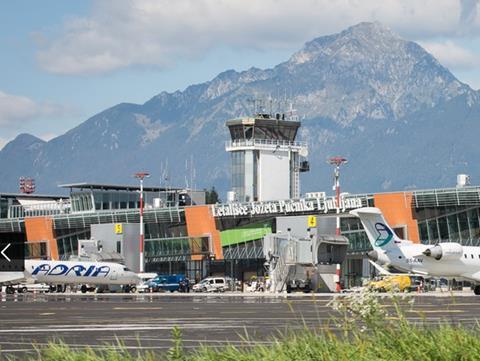
Ljubljana airport

Source: Fraport Slovenia

Foreign operators stepped in to serve Ljubljana after Adria Airways collapsed

Slovenia’s main airport, Ljubljana, is managed by Fraport Slovenia, which has welcomed the easing of restrictions.

“Most airlines cancelled passenger flights to our airport by the end of May,” the company states.

“Regardless of this fact, in the past few days we have been preparing for the reception of the first passengers and installed necessary safety measures to restart passenger traffic.”

Credit: Flight global

Ryanair makes U-turn, opts for all-Boeing fleet

Having had talks with Airbus in March 2019 about a potential order for 100 A321s and thus create a dual Airbus-Boeing fleet of aircraft, Ryanair, the Irish low-cost carrier, has announced its intention to cancel any existing deliveries of Airbus aircraft, all of which would have been from leasing companies. 

As part of the U-turn, Ryanair CEO told Reuters news agency that 30 jets destined for its Lauda subsidiary would be replaced with Boeing 737 jets, of which Ryanair currently has 450. Currently O’Leary sees holding any talks with Airbus as a waste of time, saying that:  “We would not initiate talks with Airbus until such time as Airbus wants to initiate talks with us,” adding that: “Until they need an order from the Ryanair Group, frankly we are wasting our time talking to Airbus.” 

Until the Covid-19 pandemic decimated worldwide air travel, Ryanair had anticipated expanding the Lauda fleet from 23 to 38 Airbus jets by the summer of this year, but instead it is now in talks with unions at Lauda concerning a new labor agreement and also pay cuts. As the Austrian union is currently refusing to engage in negotiations with Ryanair, O’Leary has made it very clear that if nothing changes, he will simply close down the home base of Lauda in Austria. He also made it clear that talks with Boeing regarding a new order and possible compensation for losses incurred through the grounding of the 737 would be unlikely to conclude before a previously given deadline of May 18-19 and that such negotiations would be unlikely to conclude until the grounding of the 737 was lifted, which is currently expected to be in August or September this year.

Credit: AviTrader

Emirates posts 32nd consecutive year of profit

The Emirates Group has posted a US$456 million profit for the full year 2019/2020, that ended on March 31, 2020, down 28% from the previous year. Emirates recorded a 5% revenue fall to US$28.3 billion with a 15% cash balance increase to US$7 billion. The company announced that it is not paying a dividend in order to protect its liquidity. 

During the year, the airline took delivery of six A380s from Airbus and retired six of its older (4 B777-300ER, 1 B777-300 and 1 B777-200F) aircraft. As part of its long term fleet planning, in November 2019, Emirates announced an order for 50 A350-900 XWB and 30 B787-9 aircraft at list prices of US$24.8 billion. The latest generation A350 and B787-9 aircraft will be delivered to Emirates starting from financial year 2023 and the aircraft will complement Emirates’ fleet mix, support network growth, and give more flexibility to serve seasonal or opportunistic demand better. With this, Emirates now has on order 203 aircraft – 8 A380, 50 A350, 115 B777-X and 30 B787-9, excluding options and purchase rights.

Credit: AviTrader

Monday, May 11, 2020

Avianca files for bankruptcy


The world's second-oldest airline just filed for bankruptcy because of the coronavirus pandemic
Colombian carrier Avianca, the world's second-oldest airline , filed for bankruptcy due to the "unforeseeable impact of the Covid-19 pandemic," according to a statement released on its website on Sunday.

The decision to file for bankruptcy was made with the intention to "protect and preserve operations" during the continuing pandemic.

According to the statement, Avianca directly employs 21,000 people throughout Latin America. Nearly 90% of countries where Avianca operates are under total or partial travel restrictions, according to additional information on the Avianca website.

“Avianca is facing the most challenging crisis in our 100-year history as we navigate the effects of the COVID-19 pandemic,” said Anko van der Werff, the company's CEO."

According to Van der Werff, Avianca is the second-oldest continuously running airline in the world.

Credit: CNN

Sunday, May 10, 2020

Domestic Tourism Boost Chinese Economy

Since the outbreak of the coronavirus pandemic, and the ease of restrictions in China, the May Day holiday represented a significant boost for the domestic tourism of the country. Millions of people traveled around China exploring local attractions.

During the 5-day May Day Holidays, the government figures report that China recorded 115 million domestic tourism trips which are more than the 43m trips recorded during the Qingming holiday that lasted for 3 days last month.

As great as these figures are, they are less than the numbers for last year when 195m trips were registered on May Day. The total tourism revenue from 115m tourist trips made up about $6.7bn to the total. Experts point out that the revenue generated during the May Day holiday from this year’s tourism sector was lower than that of the previous year by 60%.

Jiangxi province topped the earnings list at about 15.4 billion yuan ($2.17 billion) during the holiday, followed by Hunan at 14.1 billion yuan and Guangdong at 10.3 billion yuan.

Also, according to the Beijing Municipal Administrative Center of Parks, major tourism parks in Beijing received a total of 950,000 visitors during the five days. Between May 1 and May 5th, 11 municipal parks recorded an average daily visitor number of about 190,000.

Considering the current realities, China still has a long way to go to attain full economic recovery from the effects of the epidemic. Experts noted that public confidence in the government is already recovering to a large extent as Chinese citizens are seeing the government’s ability to control the outbreak.

Asia-Pacific director of tourism data group STR Jesper Palmqvist also sees the public confidence rising as the national congress has now scheduled their parliamentary meeting for late May after it had been suspended in March.

Data from STR has revealed that occupancy levels in hotels have seen a significant rise, as the daily rates have nearly doubled in the past weeks.

According to the head of Asia economics at USB in Hong Kong, it is highly doubtful that Chinese citizens will be traveling abroad soon. The reason is that most persons do not yet feel safe to fly. Also, China is cutting down as many international flights as possible especially as many other countries have shut their borders to visitors owing to the pandemic.

While domestic tourism and flights might be looking at more revenue, western tourism agencies and airlines will be suffering a loss of Chinese tourists and their contribution to the tourism sector.
The China Tourism Academy reported that over 6 million Chinese tourists visited Europe in 2018. Their U.S. counterpart, the National Travel, and Tourism office reports that 2.8 million Chinese tourists visited the USA in 2019.

Domestic tourism is on the rise in Beijing as the government stands up to the challenge of preventing further infections while helping the economy recover. One safety measure implemented in Beijing municipals is the official announcement that shops and malls should be kept half full, while Beijing officials work hard to revive the market confidence and broaden the consumption range.

Local tourist attractions in Beijing opened up for the first time over the break but businesses were restricted by a maximum number of entry tickets to be sold. Attractions such as the Forbidden City were also asked to sell their tickets online and avoid on-the-spot selling.

Meanwhile, Shanghai’s Disneyland is set to reopen on May 11 and is the first of its kind to reopen ever since normalcy has been gradually restored in China and its tourism industry.

Walt Disney’s CEO, Bob Chapek said the decision to reopen was made alongside their partner, the Shanghai Shendi Group. The agreement was reached based on the noticeable recovery in China’s industry, as well as the successful reopening of facilities such as entertainment complexes, hotels, and dining around Shanghai.

The Disney Park in Shanghai has experienced a long shut down since January 25 when the COVID 19 spread was worse. The closure affected all Disney theme parks worldwide that have been shut since mid-March.

The controlled and phased reopening of Shanghai’s Disney Park will go side by side health and safety precautions directed at recovering the economy and boosting businesses that will have long term effects on China’s economic development.

Credit: tourism-review.com

Saturday, May 9, 2020

ATM launches 3 Days Virtual Meeting

Arabian Travel Market organisers launches ‘ATM Virtual’ from June 1-3, 2020
Arabian Travel Market (ATM) announced the launch of ATM Virtual, a three-day event that will take place from June 1-3, 2020. The event, which underscores ATM’s commitment to delivering positive business and networking opportunities to the region’s vast travel and tourism community, will focus on emerging trends, opportunities, and the challenges which are directly impacting the tourism industry amid the COVID-19 global health pandemic.

Danielle Curtis, Exhibition Director ME, Arabian Travel Market, said, “Our debut virtual event provides us with the opportunity to work closely with the ATM community and ensure we can support the travel and tourism industry in rebounding as quickly and efficiently as possible. We will address the impact the global health pandemic has had on the travel and tourism industry and discuss a road map to recovery, identifying the trends shaping the future of the industry and the ‘new normal’ that lies ahead.”

ATM Virtual, which will take place over three days, will feature comprehensive webinars, live conference sessions, roundtables, speed networking events, one-to-one meetings, as well as facilitating new connections and offering a wide range of online business opportunities.

“For exhibitors from this region, the dedicated networking event will also have one Middle East-focused session per day, as well as sessions for buyers, focused on purchasing European and Asian products, plus a session specifically targeting Chinese buyers,” added Curtis.

Credit: tourismbreakingnews.ae

DTCM Highlight 12 steps to sustainability

Dubai Sustainable Tourism (DST) an initiative of Dubai’s Department of Tourism and Commerce Marketing (Dubai Tourism) outlines simple adjustments that residents can make to help keep the city operating as sustainably as possible during the period of lockdown. Building on the UAE’s #StayHome initiative, DTCM laid out 12 steps to sustainability, which are; Responsible consumption: purchase local produce to support local businesses and to minimise on the food miles each item has travelled to be delivered to your door; Meal Planning: Think ahead to avoid over buying or bulk purchases, consider the delivery drivers, remain conscious of food waste and be supportive of the community by only buying what you need.
Maximise Natural Light: Turn the lights off in rooms that aren’t being used and open your curtains and windows for additional daylight and fresh air; 
Energy Conservation: Ensure that air conditioning units are only working in rooms that are being used, try to only run the dishwasher when it is full and only use one glass throughout the day, washing it once you’ve finished with it.
Use water wisely: Support Dubai and educate your family members on conscious water usage; 
Concentration: Avoid distractions, set house rules for your family members to respect working time and don’t have the television on in the background if not being watched.
Health and wellbeing: Remain active, and practice meditation to remain productive and to maintain a positive frame of mind, follow Yoga La Vie for live online sessions. Avoid sitting on the sofa whilst working, sitting upright at a desk will keep you engaged and in ‘work mode’; 
Go paperless: Avoid printing paper and adopt a digital filing and document review system.
Virtual community service and volunteerism: Use your free time to support and give back to the community using your expertise, register for virtual volunteerism opportunities; 
Plant Therapy: Nurture the plants in your home and garden as they produce oxygen and can provide a sense of calm. 
Remain informed: Learn about the UAE’s unique environment and biodiversity by engaging with different virtual local platforms including Emirates Nature WWF.

Credit: tourismbreakingnews.ae

Friday, May 8, 2020

Mitsubishi to get Bombardier CRJ by June 1

The final date has been set. Bombardier and Mitsubishi Heavy Industries will close the transaction related to the acquisition of Canadair Regional Jet (CRJ) program on 1 June, 2020.

In a statement , the Japanese company said that the program will begin operations right upon the purchase and will be operated under the new name of MHI RJ Aviation Group.

Also, the CRJ program package includes “the maintenance, support, refurbishment, marketing, and sales activities for the CRJ Series aircraft, along with the type certificate”.

Both companies confirmed the acquisition fact in June, 2019. With the CRJ program MHI expects to strengthen its existing commercial aircraft business, especially the development, production, sales and support of the Mitsubishi SpaceJet commercial aircraft family.

More details will be announced in the future.

Source: aviationvoice

Boeing 737 MAX: Production in Spotlight

Boeing has reached an agreement with Spirit AeroSystems, the 737 MAX parts supplier, on the production of 125 aircraft units in 2020.

The US planemaker had temporary ceased the production of 737 MAX aircraft before the coronavirus pandemic began spreading. The manufacturing process stopped in January, 2020. Later on, the level of uncertainty, as to when the making will resume, was increased by the global crisis provoked by the virus. The entire Boeing production was on a pause, up until the middle of April, when Boeing resumed production of its commercial aircraft.

As its statement suggested, among the programs waiting for the restart is also 737 MAX. The airframer even outlined lower 737 MAX production rates for 2020, and said that it gradually will increase the number up to 31 planes per month in 2021, if the situation allows.

Now the fact has been confirmed by Spirit AeroSystems, the supplier securing Boeing with almost 70 per cent of 737 MAX aircraft structure, including the entire fuselage, thrust reversers, engine pylons and wing components.

"Before the virus outbreak, it was planned to have 216 MAX frames manufactured . The current number, 125 units, is significantly lower, however, at least it secures Spirit with some certainty over the program’s continuity."

The specific date of production restart has not been announced yet. According to Bloomberg, Boeing plans to fully resume production at its Renton, Washington, plant in coming weeks.

The entire 737 MAX aircraft fleet was grounded back in March, 2019, following two deadly crashed which killed 346 people. The manufacturer has been working hard on 737 MAX software updates to re-certify the plane and lift it from the ground.

The process has already taken much longer than expected. Therefore, Boeing hopes to have its 737 MAX cleared for take-off this year.

Source: aviationvoice

Emirates President on the Future Aviation

Emirates President Tim Clark is one of the brightest guys in the airline industry. He is one of the main people behind Emirates as we know it today, because he built the airline from the ground up. I don’t think there’s a person who has a better understanding of global aviation than he does.

I could listen to Clark talk for hours. Whenever I fly Emirates (remember when flying was a thing?!) I always enjoyed listening to the “Emirates World” radio channel, and in particular the interviews with Clark. I think I’ve probably heard the same interview a dozen times.

Clark was supposed to retire in June 2020, though obviously this isn’t an ideal time to leave a company you care about. It looks like he may now stay on a bit longer to make sure the airline continues moving in the right direction.

Tim Clark turned Emirates into one of the most well known airline brands
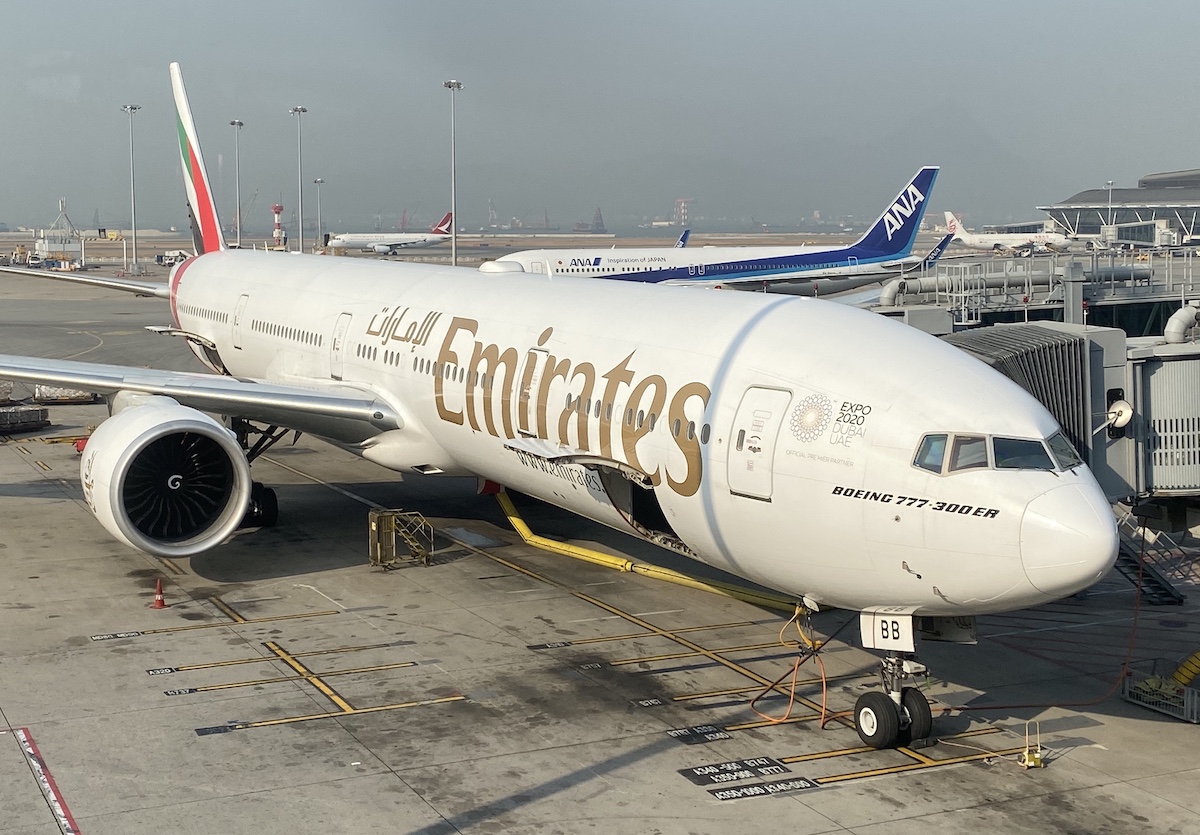
The National published an interview with Tim Clark this week, which is worth a read. I wanted to briefly hit on just a few of the highlights that I found most insightful:

  • Had the laws of supply and demand and survival of the fittest worked, Clark believes 85% of airlines would have gone out of business
  • Clark is happy we have seen as much state aid globally as we have, because otherwise we would have seen a huge number of mergers, and “there wasn’t room for more consolidation”
  • This is a “black swan” event for the airline industry, and the impact of this is worse than the aggregate of all challenges the airline industry has faced since World War II
  • Clark believes that for the next year or two, or perhaps even longer, demand for air travel is going to be tempered; even when it recovers, he expects we’ll be looking at an industry that’s 20-30% smaller than before COVID-19
  • Clark has “written off” this summer, and doesn’t expect much of anything; he certainly doesn’t think that demand will “come back like a tsunami”
  • Clark acknowledges that “the A380 is over,” but also says that “the A350 and 787 will always have a place,” and while they might not be ordered soon, when demand does come back they will be a better fit than ever before (nothing here is a surprise, since we knew the A380 was “dead,” since production was already scheduled to end in 2021)
  • Clark’s view is that he wouldn’t be surprised if the virus disappeared completely by the end of the summer, but if it doesn’t, then a vaccine is the only way that international travel will return in any substantial way
  • He believes that by next summer we’ll have widespread vaccinations, and that things could start to return to normal at that point

Clark thinks this summer should be written off

There’s nothing terribly surprising here, but I do always enjoy hearing Clark’s perspective on things. He’s not only brilliant, but he’s also a straight shooter, unlike many other airline CEOs (“we don’t need to offer premium economy, because our economy is better than premium economy on most airlines”)

Source: onemileattime.com

Thursday, May 7, 2020

Greece to open Tourism back by July 1st

A woman sits at Peraia beach as Greece begins a gradual easing of the nationwide lockdown due to the spread of the coronavirus disease (COVID 19), in Thessaloniki, Greece, on May 5..JPG
  • The country went under a lockdown early to help prevent the spread of the novel coronavirus, which authorities have credited with keeping cases and deaths of the virus low.
  • It's already reopening some businesses and Prime Minister Kyriakos Mitsotakis told CNN he hopes to have the tourism industry back up and running by July.

Greece says it hopes to reopen the country to tourists within weeks thanks to an early lockdown that helped prevent the spread of the novel coronavirus within its borders.

Greece, which has a population of 10.72 million, has seen 2,632 cases of COVID-19, a much lower count than other countries, particularly some in nearby western Europe. The country has had 146 deaths from the virus, making a per capita death rate of 13.61 per million people.

Tourism is 12% of the economy in Greece, according to the Forbes, and hotels plan to reopen on June 1. There are plans in the works to invite tourists to the country in mid-June, and Prime Minister Kyriakos Mitsotakis told CNN that he wants to have everything up and running by July 1.

"Ideally we want more high-end tourists where we can actually respect social distancing,"Mitsotakis told CNN, adding that there would be COVID-19 testing at airports and temperature checks at hotels and local businesses.

Greece was quick to issue closures when the novel coronavirus first started spreading across the world. Mitsotakis canceled carnival festivities on February 27, canceled school, and closed college campuses on March 10, and shuttered restaurants and cafes on March 13, BBC reported.

He issued a lockdown on March 23, during which residents had to register to leave their homes to exercise or go to the pharmacy or supermarket, according to BBC. If residents violated the lockdown, they were fined.

Greece's borders have been closed to non-European Union citizens since March, air travel to several countries hit by COVID-19 has been suspended, and Greece issued a mandatory 14-day self-quarantine for anyone arriving from another country. At Athens International Airport, officials are performing thorough COVID-19 testing.

"We have reached a point where we've almost completely suppressed the epidemic, at least in the first stage and we'll begin to relax. We feel we've dodged the first bullet very clearly," Mitsotakis told CNN. "I think we did it the right way. Of course we didn't get everything completely correct, but if you look at the numbers, you can't argue with what we have achieved."

Nonessential businesses reopened on Monday, many of which are evaluating customers for symptoms before they enter.

Greek tourism minister Harry Theocharis told Reuters last month that travel might look different this year, but the country hopes they can reopen its borders for the economy.

"This season is not going to be a season like the other years, I would be a fool to believe that this could ever be the case, however there is a lot that we can do in order to re-open the touristic economy, the touristic flows, and that way we will able to support a lot of those enterprises the hotels, the travel agents," he said.

Push for global tourism aid to Africa

Iata DG and CEO, Alexandre de Juniac

Five international air transport and tourism bodies have launched an appeal to international financial institutions, country development partners and international donors, to support Africa’s travel and tourism sector – which employs 24.6 million people on the continent.

“Without urgent funding, the COVID-19 crisis could see a collapse of the sector in Africa, taking with it millions of jobs. The sector contributes US$169 billion to Africa’s economy combined, representing 7.1% of the continent’s GDP,” read a joint statement by the respective bodies.

The request was made by Iata, the World Tourism Organization, the World Travel & Tourism Council, the African Airlines Association, and the Airlines Association of Southern Africa.

Some of the measures suggested include:
•US$10 billion in relief to support the industry and help protect the livelihoods of those it supports directly and indirectly;
•Access to as much grant-type financing and cash-flow assistance as possible to inject liquidity and provide targeted support to severely impacted countries;
•Financial measures that can help minimise disruption to much-needed credit and liquidity for businesses. This includes the deferral of existing financial obligations or loan repayments; and,
•Ensuring that all funds flow down immediately to save the businesses that need them urgently, with minimal application processes and without impediment from normal lending considerations such as creditworthiness.

The five bodies highlighted that while some African governments were trying to provide targeted and temporary support for hard-hit sectors such as tourism, many of these countries lacked the necessary resources to help the industry and the livelihoods it supports, through this crisis.

The situation is now critical. Airlines, hotels, guesthouses, lodges, restaurants, meeting venues and related businesses face mounting losses. Typically, tourism comprises 80% of small and medium-sized enterprises. To preserve cash, many have already begun laying off or placing staff on unpaid leave.

“The impact of the COVID-19 pandemic is being felt across the whole tourism value chain. The sector and the millions of livelihoods it supports across the world, including vulnerable communities, are particularly exposed. International financial support is key to ensuring that tourism can lead to wider economic and social recovery in these communities,” said UNWTO Secretary-General, Zurab Pololikashvili.

Iata DG and CEO, Alexandre de Juniac, agreed highlighting that without a lifeline of funding to keep the sector alive, the economic devastation of COVID-19 could take Africa’s development back a decade or more.

“Financial relief today is a critical investment in Africa’s post-pandemic future for millions of Africans,” he said.
CEO of the Airlines Association of Southern Africa, Chris Zweigenthal,
further highlighted that the impact of COVID-19 in Africa continued to be brutal.

“Air travel and tourism have essentially shut down. Now, more than ever, international countries need to come together to help those communities that are most vulnerable. The survival of our industry and its allied sectors has serious ramifications for Africa’s entire air transport system.