Translate

Thursday, April 22, 2021

Emirates may need further funding if air travel fails to recover soon


Continued low-level demand for air travel, despite the COVID-19 vaccine roll-out, has led Dubai-based Emirates to admit that a further round of funding may be required later in the year, most likely through a further injection of equity from the Dubai government, the Gulf carrier’s sole shareholder.

Talking to the online World Aviation Festival, Tim Clark, Emirates’ president, commented: "We are good for another six, seven or eight months in terms of cash. We have sufficient cash coming in to be able to keep the day-to-day operation at a neutral basis," adding: "But like everybody else, if in six months global demand is where it is today then we are all going to face difficulties. Not just Emirates".

The carrier lost US$3.4 billion in the year’s first half, while it managed to obtain US$2 billion in equity from the Dubai government in 2020. While he would not say when, Clark also advised that Emirates would make a recommendation to the government on raising cash, which would likely come in the form of an equity injection or raising debt. However, Clark was also confident that should demand pick up, by September/October the cash situation could be turned round.

Emirates has resumed flights with all 151 Boeing 777 jets which mainly carry cargo, along with 20,000 to 30,000 passengers daily. He indicated that Emirates may retain some of its older 777 passenger jets that are due to retire but convert them into cargo-only planes while freight demand remains high. Clark had intended to retire in 2020 but has remained at the helm to guide the carrier through the pandemic and to set it on its future course before he retires, though he has not given a projected date when.

Source: AviTrader

Airbus to create new aeroparts companies in France and Germany


Airbus has reaffirmed its intention to build a stronger aerostructures assembly value chain across its industrial system to its social partners, and considers aerostructures assembly as core to its business. Airbus presented its plans to create two integrated aerostructures assembly companies at the heart of its industrial system in order to reinforce its value stream management and prepare the company for its short- and long-term future.

As part of these plans, and upon successful completion of the ongoing social process, the new company in France would bring together the activities currently managed within Airbus in Saint-Nazaire and Nantes together with those of STELIA Aerospace worldwide. Another company in Germany would bring the activities of Stade and Structure Assembly of Hamburg together with those of Premium AEROTEC in Nordenham, Bremen and partly in Augsburg, while rebalancing activities towards the upper part of the value chain and reviewing its involvement in the manufacturing of detail parts.

These two new aerostructures assembly companies, both wholly owned by Airbus, would no longer be suppliers to Airbus but become integrated within the Airbus perimeter, simplifying both governance and interfaces in a new industrial setup. Their distinct status would also enable them to focus on their industry segment and be leaner and more agile, fostering competitiveness, innovation, and quality to the benefit of the Airbus programs of today and tomorrow.

Airbus also intends to create a new global player in the detail parts business, anchored in Germany. Born out of today’s Premium AEROTEC, this new entity, with its scale and advanced technologies, would be empowered to capitalize on the significant long-term growth prospects with Airbus as well as external customers, on both civil and military platforms.

In Spain, Airbus continues to work on solutions with its social partners to optimize the current industrial and aerostructures set-up in the Cádiz area in order to ensure its viability, resilience and competitiveness for the future.

Source: AviTrader

Tuesday, April 20, 2021

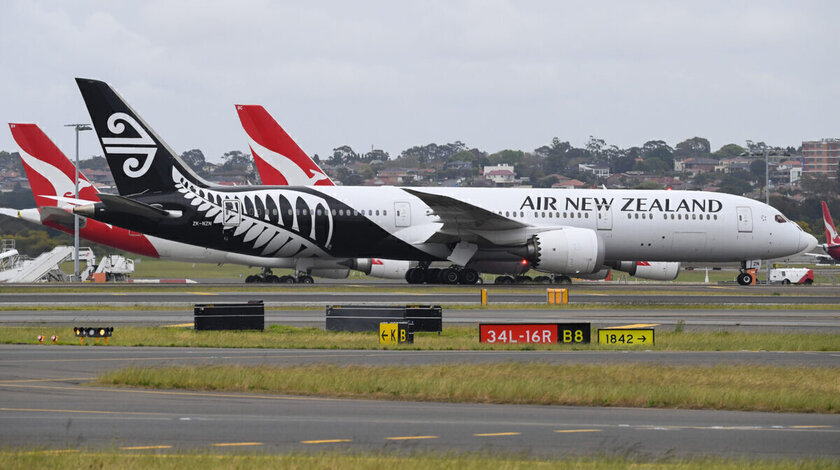
New Zealand and Australia Create a Travel Bubble


Qantas Air New Zealand

Tearful reunions were all around Auckland airport on Monday since residents from Australia could travel freely to New Zealand without a quarantine obligation for the first time in more than a year.

According to the Australian Government Department of Home Affairs, all people residing in Australia or New Zealand can enjoy quarantine-free travel, as long as they meet the health, immigration, and other standard border clearance requirements.

While Australia has previously allowed Kiwis to enter the country without quarantine, New Zealand is following suit only now. However, if you arrive in New Zealand from any other country, you must quarantine for 14 days at your own expense.

“The bubble marks a significant step in both countries’ reconnection with the world, and it’s one we should all take a moment to be very proud of,” New Zealand Prime Minister Jacinda Ardern said in a news release.

Both Australia and New Zealand did a great job keeping the Covid-19 infection cases low in their countries due to tight restrictions.

Source: Aviation Voice


Saturday, April 17, 2021

Emirates Starts Using IATA’s Health Passport App

Dubai’s flagship airline Emirates has started trialing an International Air Transport Association (IATA) Travel Pass. It is a mobile app designed to help passengers share their Covid-19 test results with airlines and travel authorities.

Passengers traveling from Dubai to Barcelona on flight EK185 were the first to use the “digital passport“ to keep the information transparent and available to Emirates. Flights from Dubai to Barcelona and London Heathrow to Dubai were chosen as starting points for the application’s trial.

Adel Al Redha, Emirates’ Chief Operating Officer, said: “The ability to process passengers’ COVID-19 relevant data for travel digitally will be the way forward. We are pleased to have been pioneers and partner with IATA in trialing this initiative in real-time and soon will be launching other initiatives to further enhance our customer experience.”

The application only supports uploading information about the test results, but it will soon be upgraded with a function allowing to share vaccination certificates. It will also have an integrated registry of travel requirements and a registry of testing centres and labs at passengers’ departure locations.

Source: Emirates

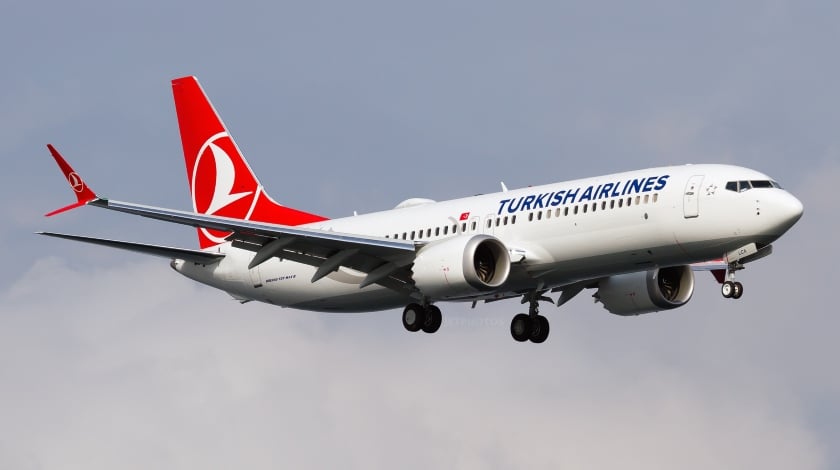
Turkish Airlines Resumed Boeing 737 MAX Operation


Turkish Airlines Resumed Boeing 737 MAX Operation

Turkey’s national carrier Turkish Airlines put one of its Boeing 737 MAX aircraft back into service following the Directorate General of Civil Aviation (DGCA) Boeing 737 MAX lift.

The first flight Turkish Airlines made using its Boeing 737 MAX after the type’s grounding was from Istanbul airport to Ankara. TK2138 took off from Istanbul Airport at 10:10 a.m. and landed at Esenboğa Airport in Ankara just before 11:00 a.m. At 11:50, the aircraft flew back to Istanbul, landing at just after 13:00. At 16:00 the same afternoon, it headed from Istanbul to Izmir and returned just after 19:00.

Turkish is one of the European airlines that rely heavily on Boeing 737 MAX, with 75 MAXs joining its fleet in the future. The only companies ahead of Turkish Airlines by Boeing 737 MAX orders are IAG and Ryanair Group.

At the moment, Turkish Airlines has 11 Boeing 737 MAX 8 and one Boeing 737 MAX 9 in its fleet. The MAX 8 variant has a two-class cabin, 16 seats in business and 135 in the economy. The single MAX 9 has a capacity for 16 business and 153 economy passengers.

Source: Aviation Voice

Wednesday, April 14, 2021

Air Canada shares turbulence after government takes equity stake

Bailout sees Ottawa take a 6% stake in the airline through discounted share purchase

Air Canada shares fell sharply on Tuesday on fears that its market value would be diluted after the Canadian government took a discounted equity stake in the flagship carrier as part of a deal for C$5.9 billion ($4.7 billion) in aid.

But analysts and investors said Air Canada's decision to accept the bigger-than-expected aid package, which was announced on Monday, was the right decision for Canada's largest carrier to ride out the crippling downturn in air travel caused by the coronavirus pandemic.

The deal gives Ottawa a roughly 6 per cent stake in Canada's largest carrier at a discount of 14 per cent, which prompted several analysts to cut their price targets.

"We believe some investors could be negatively surprised by equity dilution and a repayable loan for refunds," Scotiabank Konark Gupta wrote in a note, while reiterating a "sector perform" rating on the stock.

Air Canada shares opened more than 4 per cent higher before sinking about by 6.7 per cent, before recovering to trade about 2.8 per cent lower at C$26.24 on the Toronto Stock Exchange.

Canada is wrestling with soaring Covid-19 cases driven by the new coronavirus variants and a comparatively slower vaccination rollout than in the United States, raising questions about the reopening of air travel.

That could put pressure on Canadian authorities to maintain crippling temporary restrictions, such as a three-day hotel quarantine for arriving passengers which airline executives have said should be phased out ahead of the summer season.

"The bigger issue for AC and its investors is the timing around the vaccine rollout and eventual lifting of travel restrictions, as most markets that have reopened show strong pent-up demand," Raymond James analyst Savanthi Syth said in a note.

Prime Minister Justin Trudeau on Tuesday praised the deal with Air Canada as "good and fair".

TD Securities analyst Tim James described the funding as providing a backstop for the carrier.

"We believe that Air Canada's access to this capital will prove to be insurance as opposed to necessary liquidity required to finance operations or capital expenditures in 2021 and beyond," Mr James wrote in a note in which he cut his target price on Air Canada to C$29 from C$31, while reaffirming a "hold" rating.

Canada's government is also engaged in aid talks with WestJet Airlines and Transat AT. Air Transat, which has suspended flights until June due to pandemic guidelines, has said it needs at least C$500 million in financing this year.

"While we expect similar negotiations at competitors, the longer things drag on, the tougher it will be on AC's Canadian competitors," Ms Syth said.

Peter Letko, senior vice president at Letko Brosseau and Associates, which is an Air Canada shareholder, said the government deal "removes worries" amid concerns that the pandemic could drag on.

Air Canada also said it would ease restrictions on future refunds for passengers, a key part of the government talks.

The agreement – the largest individual coronavirus-related loan that Ottawa has arranged with a company – was announced after the airline industry criticised Mr Trudeau's Liberal government for dawdling.

Source: TheNational.com

France to scrap certain domestic flights where the train offers a viable alternative

As part of a series of beneficial climate and environmental measure, French MPs have voted to ban all domestic flights in France where trains offer a viable alternative in two and a half hours or less travel time. It is estimated that planes that fly these short-haul routes produce 77-times the volume of CO2 per passenger compared to trains. However, the measure, which was put forward by the climate set up by President Macron has been seen by many as only a half measure as the original proposition was to include all flights where routes were also covered by train journeys of four or less hours. Thus, while flights between Paris Orly Airport and Nantes, Bordeaux and Lyon will be scrapped, those to Toulouse, Marseille and Nice will remain unaffected.

Mathilde Panot, of the hard left La France Insoumise, said the measure had been “emptied”, while her colleague Danièle Obono said retaining the four-hour threshold would have made it possible to halt routes that “emit the most greenhouse gases”.

When the French government gave Air France-KLM a €7 billion bailout a year ago to cope with the effects of the pandemic on airlines, one of the conditions was that certain internal flights would be dropped from Air France’s schedule, while Air France-KLM Chief Executive Benjamin Smith has said the airline is committed to reducing the number of its French domestic routes by 40% by the end of this year.

France’s new law will be watched closely by other countries. Austria’s coalition conservative-green government introduced a €30 tax on airline tickets for flights of less than 217 miles (350km) last June and a ban on domestic flights that could be travelled in less than three hours by train. (€1.00 = US$1.19 at time of publication.)

Friday, June 26, 2020

IATA proposes alternatives to quarantine


The International Air Transport Association (IATA) urged governments to avoid quarantine measures when re-opening their economies. IATA is promoting a layered approach of measures to reduce the risk of countries importing COVID-19 via air travel and to mitigate the possibility of
transmission in cases where people may travel while unknowingly being infected.

“Imposing quarantine measures on arriving travelers keeps countries in isolation and the travel and tourism sector in lockdown. Fortunately, there are policy alternatives that can reduce the risk of importing COVID-19 infections while still allowing for the resumption of travel and tourism that are vital to jumpstarting national economies. We are proposing a framework with layers of protection to keep sick people from traveling and to mitigate the risk of transmission should a traveler discover they were infected after arrival,” said Alexandre de Juniac, IATA’s Director General and CEO.

“Safely restarting the economy is a priority. That includes travel and tourism. Quarantine measures may play a role in keeping people safe, but they will also keep many unemployed. The alternative is to reduce risks through a series of measures. Airlines are already offering flexibility so there is no incentive for sick or at-risk people to travel. Health declarations, screening and testing by governments will add extra layers of protection. And if someone travels while infected, we can reduce the risk of transmission with protocols to prevent the spread during travel or when at destination. And effective contact tracing can isolate those most at risk without major disruptions,” said de Juniac.

There are some hurdles to being able to implement the full suite of measures. “Data transmission, required for health declarations, testing and tracing, raises privacy concerns. And mutually recognized standards would be needed for testing. Governments have a common interest in finding solutions. The rapid agreement by governments to ICAO’s Take-Off guidelines demonstrates that progress on complex issues is possible where there is the political will to do so,” said de Juniac.

There is every economic incentive to make a layered approach work. The World Traven and Tourism Council estimates that travel and tourism accounts for 10.3% of global GDP and 300 million jobs globally (direct, indirect and induced economic impact).

Mandatory quarantine measures stop people from traveling. Recent public opinion research revealed that 83% of travelers would not even consider traveling if quarantine measures were imposed on travelers at their destination. And analysis of trends during the lockdown period shows that countries imposing quarantine saw arrivals decrease by more than 90%—an outcome that is similar to countries that banned foreign arrivals.

“A layered approach to safety has made flying the safest way to travel while still enabling the system to function efficiently. That should be an inspirational framework to guide governments in protecting their citizens from the terrible risks of both the virus and joblessness. Quarantine is a lop-sided solution that protects one and absolutely fails at the other. We need government leadership to deliver a balanced protection,” said de Juniac.

Credit: AviTrader

Thursday, June 25, 2020

Preliminary report on PK8303 issued: gear-up landing after unstabilized approach preceded crash


Status: Preliminary - official

Date: Friday 22 May 2020

Time: 14:40

Type: Airbus A320-214

Operator: Pakistan International Airlines - PIA

Registration: AP-BLD

C/n / msn: 2274

First flight: 2004-08-17 (15 years 9 months)

Total airframe hrs: 47124

Cycles: 25860

Engines: 2 CFMI CFM56-5B4/P

Crew: Fatalities: 8 / Occupants: 8

Passengers: Fatalities: 89 / Occupants: 91

Total: Fatalities: 97 / Occupants: 99

Ground casualties: Fatalities: 1

Aircraft damage: Destroyed

Aircraft fate: Written off (damaged beyond repair)

Location: 1,4 km (0.9 mls) E of Karachi-Jinnah International Airport (KHI) (Pakistan)

Phase: Approach (APR)

Nature: Domestic Scheduled Passenger

Departure airport: Lahore-Allama Iqbal International Airport (LHE/OPLA), Pakistan

Destination airport: Karachi-Jinnah International Airport (KHI/OPKC), Pakistan

Flightnumber: PK8303


Narrative: Pakistan International Airlines flight 8303, an Airbus A320, crashed on approach to Karachi-Jinnah International Airport (KHI), Pakistan. The airline stated there were 91 passengers on board and 8 crew members. Officials involved in the rescue operation reported that 97 bodies have been recovered and that two passengers have survived the accident.


The flight departed Lahore at 13:05 hours local time (08:05 UTC) and was expected to arrive at Karachi about 14:45 (09:45 UTC). 


Departure from Lahore and cruising flight were uneventful. The flight crew did not follow standard callouts and did not observe CRM aspects during most parts of flight. According to the Pakistani Aviation Minister, the crew were engaged in conversations related to the coronavirus.


The controller at Karachi East Area Control cleared the flight for the Nawabshah 2A arrival procedure, and advised to expect an ILS approach for runway 25L. The flight was later cleared at pilot's discretion to report direct MAKLI, a waypoint 15 nautical miles at a radial of 075 from the Karachi VOR, and descend to FL100, and later re-cleared for FL50. 


The aircraft changed over to the Karachi Approach controller and was cleared to descend down to 3000 ft, before reaching MAKLI.


The aircraft ended up higher than the required descend profile. At MAKLI the aircraft was at 9780 ft and at about 245 knots IAS. In order to manage the descent and lose the additional height, the OPEN DES mode was selected via the FCU, both autopilots were disengaged and speed brakes were extended.


Karachi Approach inquired "confirm track mile comfortable for descend" and later advised to take an orbit, so that the aircraft could capture the required descent profile. No orbit was executed and the effort to intercept the glide slope and ILS localizer was continued. At 7221 ft at around 10.5 NM from runway 25L the undercarriage was extended.


Karachi Approach advised repeatedly about the excessive height but the flight continued the approach.

At an altitude of 1740 feet and at a distance slightly less than 5 nautical miles from runway 25L the undercarriage as raised. At this time, the aircraft had intercepted the localizer as well as the glide slope. Flaps 1 were selected at 243 knots IAS. Over-speed and EGPWS warnings were then triggered.


Since the approach to land was continued, Karachi Approach instead of changing over the aircraft to the Tower controller, contacted Karachi Tower by phone to request landing clearance.


The Tower controller confirmed clearance to land without observing the abnormality that the landing gears were not extended. Karachi Approach then cleared the aircraft to land.


At 500 ft, the airspeed was 220 knots IAS at a slat/flap configuration 3, and a descent rate of 2000 ft/min. Several warnings and alerts sounded in the cockpit, such as overspeed, landing gear not down and ground proximity alerts. The landing was carried out with landing gears retracted. The aircraft touched the runway surface on its engines. The flight crew applied reverse engine power and initiated a braking action. Both engines scraped the runway at various locations causing damage to both of them. 


The Tower controller observed the gear-up landing and contacted the Karachi Approach controller by phone. Subsequently Karachi Approach did not relay this to the flight crew.


The landing was discontinued and a go-around was executed. 


At 14:35 the flight crew radioed that they were going around and requested another ILS approach to runway 25L. The controller instructed the flight to turn left heading 110 and climb to 3000 feet. Four minutes later the flight reported they had "lost engines" and subsequently declared a Mayday. The controller cleared the flight to land with both runways (25L and 25R) available.


Both engines failed one by one and subsequently the Ram Air Turbine (RAT) deployed to power the essential aircraft systems. 


The aircraft was not able to reach the runway and crashed about 1340 meters short of runway 25L in a residential area named Model Colony. It was a slow speed impact with a high angle of attack. The aircraft broke up and a large post-impact fire erupted. A total of 12 houses and multiple cars suffered major damages due to the crash. One person on the ground died of her injuries on May 31.


Credit: Aviation Safety Network 

Wednesday, June 24, 2020

DHL Express to build new gateway at Munich Airport


DHL Express Germany and Munich Airport have concluded an agreement for the construction of a new cargo building at Munich Airport. The new building will be built on the site currently occupied by the car parks P 80 and P 80 West and will have a gross floor area of more than 8,000 m². 

For the first time, the partners signed the contract digitally, reflecting the current restrictions. DHL Express will plan, build, and operate the new building and lease the land from Munich Airport. Currently, the company rents hall space in the existing cargo center at Munich Airport. The start of operations at its own location, which will be six times bigger, is scheduled for 2022. 

In recent years, DHL Express has seen a substantial increase in import and export volumes at its Munich gateway. “The existing building could not keep up with this growth,” says Markus Reckling, Managing Director of DHL Express Germany, explaining the need for this €70 million investment project. “After modernizing and expanding our service center in Unterschleißheim for €13 million last year already, the construction of our new gateway at the airport is the next step in the infrastructure plan with which we are clearly committing to our presence in the Munich region. Even in the currently difficult economic situation, we are continuing to invest systematically in service for our customers, which is our top priority.” 

The new gateway will have direct airside access and two “PUD” (pick-up and delivery) fingers. Up to 65 delivery vehicles at a time can be dispatched here. This creates a time-saving benefit for pick-up and delivery, particularly for customers in the Landsberg-Ingolstadt region.

The new station will meet the security requirements of the Transported Asset Protection Association (TAPA) and obtain the globally recognized TAPA Class A certification, the highest security level in air transportation. 

Credit: AviTrader

Lufthansa closes down SunExpress Germany


SunExpress Deutschland GmbH (Sun Express Germany), the joint venture carrier involving Lufthansa and Turkish Airlines, is to close with the loss of approximately 1,200 jobs. Sun Express Germany is a separate company to Turkish Sun Express, the latter concentrating predominantly on flights between Germany and Turkey, while the former serves a number of leisure destinations in the Mediterranean region, while also flying on behalf of Eurowings, the low-cost carrier. 

Sun Express Germany operated a fleet of over a dozen Boeing 787-300s, and also a number of Airbus A330-200s which it wet leased to Lufthansa’s Eurowings. It is anticipated that Eurowings will take over some of the carrier’s short- and medium-haul routes, but it is not known how many of the 1,200 staff will offered posts within the Group. In a statement, Lufthansa says it was jointly decided by the shareholders of SunExpress Germany to close the airline. Flights had already been halted and all aircraft grounded since the beginning of April, due to Coronavirus-related travel restrictions across Europe and the world.

“After intense discussions and evaluating various options for the continuation of flight operations, all shareholders have taken the decision to discontinue operations, which was agreed on during a meeting on June 23,” the Lufthansa Group stated. Turkish Airlines’ SunExpress will continue to operate its own routes using a fleet that consists of over 40 Boeing 737-800s.

Credit: AviTrader


Monday, June 22, 2020

KLM Royal Dutch Airlines Gradually Increases Capacity


After a hard stop in April, KLM Royal Dutch Airlines has revealed gradually increasing capacity for the summer months. In July the carrier expects to operate 5,000 European flights and in August – 11,000. Intercontinental numbers are around 1,900 in July and 2,100 in August.

As to intercontinental flights, these are restored more slowly because of travel restrictions still in force in many countries globally. Therefore, intercontinental numbers are around 1,900 in July and 2,100 in August.

Currently on half of intercontinental flights KLM carries only cargo. Nevertheless, the company hopes after softening travel restrictions, these numbers will increase.
In April KLM operated 1,116 flights within Europe and 612 intercontinental flights.
As to destinations, “KLM has opted to restart as many destinations as possible first in order to offer customers a wide choice and then to increase frequencies and capacity”.

This means that in July around 80 percent of the normal number of European destinations and around 75 percent of intercontinental destinations (half of flights only cargo) will be offered. In August this will be around 95 percent and 80 percent respectively.

Although a total of 20,000 flights for the two busiest months of the peak season is not a skyrocketing record (compared to 2019, when KLM in the months of July and August KLM operated a total of some 22,000 flights), it is still a positive trend compared to April.

Credit: Aviation Voice

Thursday, June 18, 2020

UAE sets conditions for travel to select destinations from June 23


Dr Amna Al Dhahak, spokeswoman for the UAE health sector, has clarified that the new rules easing restrictions on the elderly and children under 12 only applies to the emirate of Dubai. "Adults up to the age of 70 can enter malls, but the lower age limit of children under 12 is still in force for other emirates," she said.

Dr Farida Al Hosani, spokesperson for the UAE government, said: "We should continue protecting ourselves through adhering to the precautionary measures, boost our immune system through health lifestyles-including balanced diets and exercise, protect our families and community and to take care of family members or anyone who have chronic diseases."

The UAE also announced three categories of destinations for citizens and residents wanting to travel abroad from June 23 and specified conditions for travellers.

Dr Seif Al Dhaheri, spokesperson from the National Emergency, Crisis and Disaster Management Authority, said in a virtual press briefing on Wednesday that countries that are allowed for Emiratis to travel to are split into three categories: low-risk where everyone can travel, medium risk (travel for specific purposes) and high-risk countries (no travel).

The mandatory conditions that travellers must adhere to before travelling include: UAE residents/citizens will have to register for the Twajudi service of the Ministry of Foreign Affairs, people cannot travel unless they are Covid-19 negative, they must have international health insurance and should abide by the precautinary measures at the airport.

"Individuals with temperature more than 38ºC will be isolated; those with symptoms will not be allowed to travel," said Al Dhaheri.

"Travellers will have to fill in a health application and pledge that they will adhere to all requirements, and not travel anywhere else that they haven't declared. If you fall sick in the destination country, you will inform the UAE embassy/consulate there."

Highlighting the conditions to adhere to while returning to the UAE, the officials said travelers must wear face masks and gloves all the time, carry a travel file, including health status and ID cards, and should download the AlHosn app.

Returnees will also undergo a 14-day home quarantine or for seven days if one is returning from low-risk countries. If they belong to the vital sectors and if home quarantine is not possible, travellers can opt for hotel quarantine.

"There are specific measures for certain categories of people like students, diplomats, those in essential jobs," he said.

UAE'S TRAVEL GUIDELINES FOR CITIZENS & RESIDENTS
>> Before leaving the UAE
. Register with Twajudi
. Ensure you meet all requirements of the destination: Pre-travel check-up, health insurance, quarantine, tracking programmes/apps
. Follow guidelines and precautions at the airport and in the aircraft
. Fill out the traveller's health status form
. Complete a medical check before departure
. Register through the Federal Authority for Identity and Citizenship (FAIC) website in order to travel outside the UAE
. People over 70 are not allowed to travel. Those with chronic diseases are discouraged to travel

>> At the destination
. Follow local guidelines and measures for Covid-19
. Self-monitoring for Covid-19 symptoms
. UAE citizens must notify the UAE embassy in destination country if you experience any symptoms
. If you experience any symptoms, head to the nearest medical centre for emergency testing

>> Upon returning to the UAE
. Follow the federal and local guidelines for Covid-19
. Download and activate the AlHosn app
. Follow UAE quarantine guidelines and testing procedures (which vary depending on the destination the traveller is returning from)

Credit: khaleejtimes.com

Wednesday, June 17, 2020

Pakistan to resume Flight Operations June 20

Pakistan allows all airlines to operate, passengers to buy tickets directly
Stranded Pakistanis are no more required to wait for special flights ticket as the government has allowed all international airlines to resume their flight operations from June 20.

In a series of tweet, Pakistan's Ministry of Overseas Pakistanis and Human Resource Development said that now intended travellers to the country will be able to buy tickets directly from the airlines and they don't have to wait for call from the consulate and the embassy for approval to buy tickets.

Pakistan Prime Minister Imran Khan chaired a Federal Cabinet meeting in Islamabad on Tuesday and gave green signal to resume international flight operation.

Initially, the international flights will only operate from Gulf countries and at later stage other airlines will be allowed to repatriate stranded Pakistanis through normal flight operations, according to sources. Pakistan suspended international flights on Mach 21 to contain the spread of Covid-19.

Ghulam Dastgir, Pakistan's Ambassador to the UAE, said Islamabad has decided to open its airspace for all international airlines in a phased manner.

"In first phase, international airlines are allowed to book stranded Pakistanis from June 20 onwards. It will help facilitate overseas Pakistanis who stranded after the ban on international flights in March,"" Dastgir told Khaleej Times on Wednesday.

More than 80,000 stranded Pakistani citizens have registered with the Pakistani diplomatic missions in the UAE so far. Majority of this [around 70,000] are registered with the Pakistan Consulate General in Dubai.

"We have repatriated more than 36,000 Pakistanis, including 18,000-plus from Dubai, so far. Pakistan International Airlines has repatriated more than 29,000 Pakistanis and rest have been travelled through the UAE airlines including Emirates, flydubai and Air Arabia," the ambassador said.

Majority of 1.5 million Pakistanis residing in the UAE are comprising of blue-collar workers and many of them have lost their jobs and are now stranded due to coronavirus crisis.

He said Pakistani government is coordinating with the UAE authorities to organise special flight operations to repatriate its citizens from the emirate.

"We started the registration of stranded Pakistanis in the UAE in March. We proposed the government to open Pakistani airspace with more international flights so maximum people can get benefit of the policy," the ambassador said.

Dr Moeed Yusuf, special assistant to Pakistan Prime Minister on National Security, said all airlines will be allowed to operate in Pakistan from June 20.

Addressing a press conference in Islamabad, he said up to 45,000 Pakistanis per week are expected to return to the country following the ease of ban on international flights.

Syed Zulfiqar Bukhari, special assistant to Prime Minister for Overseas Pakistani, was also present on the occasion.

"We are going to resume international flights with 25 per cent capacity with affect from June 20 to accelerate the repatriation of stranded Pakistanis," Yusuf said.

Sources said Bukhari convinced the prime minister to allow international flights as soon as possible to facilitate overseas Pakistanis. "Nearly 200,000 Pakistanis have become jobless and stranded mostly in Gulf countries and we need to offer them helping hand," Bukhari informed the prime minister.

Yusuf said overseas Pakistan are no more required registration and approval to book their return flights to the country.

"We are ready to facilitate stranded Pakistanis. All passengers will not be screened for Covid-19. However, passengers will have to self-quarantined at home for 14 days," he said.

According to aviation officials, Pakistan has already allowed eight airports across the country to receive repatriation flights and more measures will be announced in due course of time to facilitate the return of overseas Pakistanis.

Credit: khaleejtimes.com

Tuesday, June 16, 2020

UAE allows citizens, residents to travel from June 23


     (Alamy Image)

UAE citizens and residents will be permitted to travel abroad to certain destinations, it was announced on Monday.

Categories of the people as well as the approved destinations will be announced at a later date, a joint announcement by the Ministry of Foreign Affairs and International Cooperation (MOFAIC), the Federal Authority for Identity and Citizenship (ICA), and the National Emergency Crisis and Disaster Management (NCEMA) stated.

@NCEMAUAE
A new step towards the gradual return to normal life.
#YouAreResponsible#We_Are_All_Responsible   9:12 PM - Jun 15, 2020

Additionally, the UAE will facilitate travel in line with all the appropriate precautionary and preventative measures to tackle the Covid-19 pandemic.

The statement mentioned that guidelines and procedures for travellers will be also announced and must be adhered to by both UAE citizens and residents before they travel, during their stay abroad and on their return to the UAE.

The joint statement clarified that the announcement came following thorough evaluations by authorities of the successful preventative measures currently in place and recent positive developments.

Credit: Khaleejtimes.com

Monday, June 15, 2020

Qatar Airways to lay off staff and slash pilot salaries to cope with Covid-19


The basic pay of two senior pilot grades will be reduced by a quarter while junior officers pay will be reduced by 15%
Qatar Airways is cutting the salaries of some pilots and will make others redundant to help reduce costs and soften the impact of the Covid-19 pandemic.

The basic pay of two senior pilot grades will be reduced by a quarter while junior aviators will face 15 per cent decreases, according to a June 4 letter to flight-deck crew from chief flight operations officer Jassim Al-Haroon seen by Bloomberg. The measures won’t apply to Qatari nationals.

The state-owned carrier said last month it needs to cut 20 per cent of its workforce to adapt to reduced demand following the coronavirus outbreak, which prompted most governments to close borders and order people to stay at home. Flight-deck crew will be included in the plan, Mr Al-Haroon said in the letter, with captains and cadet pilots alike to be impacted.

The airline employs more than 46,000 people, according to its website, meaning the layoffs could affect about 9,200 workers. Carriers around the world have embarked on similar plans.

A spokesman for Qatar Airways declined to comment on the letter to pilots.
The Qatar Airways plan echoes a similar initiative by its government owner, which last week told state-funded entities to cut spending on non-Qatari wages to help shore up finances.

Credit: thenational.ae

Wednesday, June 3, 2020

Rolls-Royce celebrates 110 years of founder’s historic flight

Rolls became first aviator to fly non-stop from England to France and back on June 2, 1910

After putting off his flight for over a week due to high winds, fog and mechanical problems, Rolls finally managed to take off at 6:30pm on June 2, 1910.
Image Credit: Supplied

It was this day, 110 years ago that Charles Stewart Rolls took off on a solo flight in his rickety biplane to achieve the world’s first non-stop double crossing of the English Channel by aeroplane. Rolls-Royce, co-founded by Rolls along with Sir Henry Royce, marked the day by releasing a few images of the aviation pioneer.

The 95-minute flight made Rolls the first Englishman to fly an aeroplane across the English Channel, and the first aviator ever to fly non-stop from England to France and back again.
Image Credit: Supplied

After putting off his flight for over a week due to high winds, fog and mechanical problems, Rolls finally managed to take off at 6:30pm on June 2, 1910. According to reports from the time, Rolls reached an altitude of 900 feet and a speed of “quite forty miles an hour” as he approached the coast of France. By 7.15 pm, he was flying over the small French town of Sangatte, where the present-day Channel Tunnel emerges. Here, he threw overboard three weighted envelopes, each containing the message: ‘Greetings to the Auto Club of France…Dropped from a Wright aeroplane crossing from England to France. C. S. 
Rolls, June 1910. P.S. Vive l’Entente’’

Tragically, Rolls met his death just a month after his cross-Channel feat, on 12 July 1910, when the tail-piece of his aircraft broke off it plunged to the ground from a height of 100 feet.
Image Credit: Supplied

At 8.00 pm, he was back in Dover where he entertained the waiting crowd by flying in circles around the outer towers of the town’s medieval castle. The 95-minute flight made Rolls the first Englishman to fly an aeroplane across the English Channel, and the first aviator ever to fly non-stop from England to France and back again.

Tragically, Rolls met his death just a month after his cross-Channel feat, on 12 July 1910, when the tail-piece of his aircraft broke off it plunged to the ground from a height of 100 feet. He was just a few weeks away from his 33rd birthday.

“Charles Rolls combined a fine technical mind with a bold, adventurous spirit; it is no wonder that aviation and motoring held such powerful, almost magical attractions for him. He was a true pioneer in both fields, instrumental in the development of aeroplanes and motor cars with his record-breaking feats,” says Torsten Müller-Ötvös, Chief Executive Officer, Rolls-Royce Motor Cars. “It seems particularly appropriate to remember his remarkable flight this year. 

Apart from the historical significance of the 110th anniversary, it comes at a time when we still face severe restrictions on our freedom to travel and explore. It encourages us to keep looking outwards, over the horizon, and dreaming of adventures we’ll take in the future – a reminder that anything is possible,” he adds.

Credit: gulfnews

Quarantine will cause economic disaster says UK Hospitality

A new survey among the owners and chief executives of UK travel and hospitality businesses says they expect to make redundant up to 60 per cent of their staff if planned quarantine measures are introduced by the government next Monday.
The quarantine measures, if they go ahead on June 8th, will mean that anyone entering UK ports, airports and Eurostar, unless exempt, will have to quarantine at home for 14 days after their arrival or face £1,000 fines.

Officials were due to examine the measures in discussions today, with reports suggesting some members of parliament support a loosening of the requirements.

The survey was conducted among owners and chief executives accounting for over £5 billion worth of sales in the travel industry.

In the survey, 94 per cent of business leaders said they expect their summer bookings to disappear if quarantine plans are introduced.

Half of those who responded expect their future bookings to drop by between 80 and 100 per cent.

As a result of the extreme Government measures, 71 per cent of chief executives say they expect to make almost two-thirds of their staff redundant.

In an even more worrying sign, 28 per cent of company leaders say they may cease trading altogether if quarantine plans proceed.

However, in a finding that will cause concern to the chancellor Rishi Sunak, 99 per cent of chief executives interviewed say the quarantine measures will cause widespread damage to the UK economy.
George Morgan-Grenville, chief executive of tour operator Red Savannah, who is leading the campaign to get the quarantine measures overturned, commented: “The findings are catastrophic for the UK economy and for the travel and hospitality sector.

“By pursuing its quarantine plans without due regard for the economic consequences, the government is choosing to ignore the devastation it will cause to companies, to employment and to the lives of all those whose jobs will be lost.

“The quarantine measures are a blunt weapon which will bring only economic disaster.”

Over 300 companies have now endorsed a letter to the home secretary, Priti Patel, calling on the government suspend the policy.

The companies are also calling for the Foreign & Commonwealth Office to amend its current travel advice warning against all non-essential travel as this is also preventing people booking future holidays.
Countries with an equal or lower rate of Covid-19 to the UK should be exempted from the current advice, they argued.

Credit: breakingtourismnews

Tuesday, June 2, 2020

Embraer looks towards India and China as potential business partners after Boeing debacle

Embraer looks towards India and China as potential business partners after Boeing debacle

Brazilian planemaker Embraer has confirmed that it would consider a new partnership with China, India, Russia and possibly other countries in relation to its commercial jet division as part of a revised restructuring plan after Boeing abruptly backed out of a deal.

Embraer Chief Executive Francisco Gomes Neto has said that the company is looking at a new five-year plan that would involve engineering and production. However, he was keen to stress that there have been no firm negotiations either with Russia’s Irkut, India, or China’s state-owned COMAC now that Boeing is no longer in the picture, despite the fact the company had just posted a first-quarter loss of US$292 million as a combined result of the Boeing fiasco and COVID-19 pandemic.

Embraer also confirmed it was seeking new liquidity. Reuters news agency has reported that Brazilian development bank BNDES is helping coordinate a US$600 million loan for the planemaker, which burned through US$677 million in cash in the quarter. Embraer is declining to comment on the arbitration process that is in place against Boeing over the cancellation of their deal. It had placed staff on paid leave in January in order to finalize the Boeing deal, the cost of which has made a major contribution to its 23% drop in revenue. Embraer has said that it expects to recover tax costs from Boeing that are related to the deal that negatively affected Embraer’s quarterly results.

 AvTourNet Group

Bombardier concludes sale of CRJ Series

Bombardier concludes sale of CRJ Series regional jet program to Mitsubishi Heavy Industries

Bombardier has closed the previously announced sale of the CRJ Series aircraft program to Mitsubishi Heavy Industries, for a cash consideration of approximately US$550 million, subject to post-closing adjustments and the assumption of liabilities by MHI related to credit and residual value guarantees and lease subsidies amounting to approximately US$200 million. Under the agreement, the Corporation’s net beneficial interest in the Regional Aircraft Securitization Program (RASPRO), which is valued at approximately US$170 million, has been transferred to MHI.

Through this sale, MHI acquires the maintenance, support, refurbishment, marketing, and sales activities for the CRJ Series aircraft, including the related services and support network located in Montréal, Québec, and Toronto, Ontario, and its service centers located in Bridgeport, West Virginia, and Tucson, Arizona, as well as the type certificates.

Bombardier will continue to supply components and spare parts and will assemble the remaining 15 CRJ aircraft in the backlog as of March 31, 2020 on behalf of MHI until the complete delivery of the current backlog, expected in the second half of 2020.

Bombardier retains certain liabilities representing a portion of the credit and residual value guarantees totaling US$288 million as of March 31, 2020. This amount is largely fixed and not subject to future changes in aircraft value and is mainly payable by Bombardier over the next four years.

 AvTourNet Group